Exhaust air filtration
for smokehouses

We remove tar, aerosols and odour from your smoking exhaust air — electrostatically instead of thermally. Safely comply with TA-Luft emission limit values and save up to 80% energy.

THE TASK IN INDUSTRIAL SMOKING

Smoking exhaust air: tarry, VOC-heavy and odour-intensive

Industrial smoking and cooking systems generate exhaust air unlike almost any other application: sticky tar and grease aerosols, plus phenols, VOC and formaldehyde — and an odour that is perceptible far beyond the factory premises.

Clean gas requirements according to BImSchG and TA-Luft must be met — total carbon, formaldehyde and odour, in practice often 500 odour units per m³. The question is therefore not whether to clean, but with what. And what this decision costs over the service life of the system.

Thermal oxidation complies with the values, but works with high temperatures and fossil energy — a permanent cost driver since the introduction of CO₂ pricing. A biofilter works without a burner, but cannot withstand the tar in the long run: the carrier material sticks together, the separation efficiency decreases, and in the end, there is contaminated filter material that must be replaced and disposed of.

That is why tar separation is our top priority.

The electrostatic tube precipitator removes tar, grease and oil mist from the exhaust air before it reaches a further stage, and cleans itself via an integrated hot air cleaning programme — no filter media changes, no declining performance, no production downtime.

What follows depends on your clean gas requirements: wet scrubber, UV light, activated carbon or an electric RTO.

Icon-Energy-Accent

ENERGY EFFICIENT and LOW MAINTENANCE.

Save up to 92% of the operating costs of a thermal oxidation system — entirely without natural gas burners. And unlike the biofilter, the system cleans itself automatically: tar flows off, nothing sticks, no filter replacement.

Icon-Industry-Accent

SAFELY COMPLY WITH EMISSION LIMIT VALUES.

Meet the TA-Luft clean gas values for total carbon, odour and formaldehyde. The two-stage KMA process reliably separates tar and odours — ensuring compliance according to BImSchG.

Icon-Odours-Nose-V2-blue-web

Healthy air.
Satisfied neighbours.

Eliminate odour emissions from tar, phenols and VOC before complaints arise. Crucial for smokehouses in residential areas or city centres.


industrial SMOKING PROCESSES

KMA offers proven solutions for all smoking processes

Smoking fish Salmon, trout, mackerel, halibut and other fish specialities.
Smoking meat & sausages Ham, salami, sausage, Kasseler
— Hot, warm and cold smoking
Smoking cheese & specialities Mountain cheese, cream cheese, tofu and meat alternatives with smoke aroma
Smoking salt & spices Sea salt, salt flakes and spice blends

Do you operate a thermal oxidation system in your smokehouse?

Time to re-evaluate your thermal oxidation.

Since 2025, the CO₂ tax is €55/t, TA-Luft has been revised — the economic viability of an oxidiser is shifting. An example: For 3,000 m³/h and 5,000 operating hours, an oxidiser (50% HR) costs around €104,560/year, the KMA solution €20,000 — with 90 kW/h usable heat and a CO₂ balance of 1,393 → 95 t.
KMA describes how this is achieved in practice in the leading industry magazine Fleischwirtschaft, using the example of a Bavarian meat processor who replaced their oxidiser in four steps.

How you can replace your thermal oxidation.

We put our trust in KMA

OUR SOLUTION for smokehouses

One step decides all others: tar separation

Smoking exhaust air stands and falls with one step — the separation of sticky tar and grease aerosols. If this is not low-maintenance, the tar clogs every downstream stage: biofilters, activated carbon, even the ceramics of an RTO. No process separates smoking smoke more energy-efficiently and effectively than the electrostatic tube precipitator — the industry standard for tar separation. It is the first, indispensable building block of every KMA solution. We build two proven combinations on this basis.

AAIRMAXX® tube electrostatic precipitator

Our electrostatic tube filter (ESP): The core of every solution

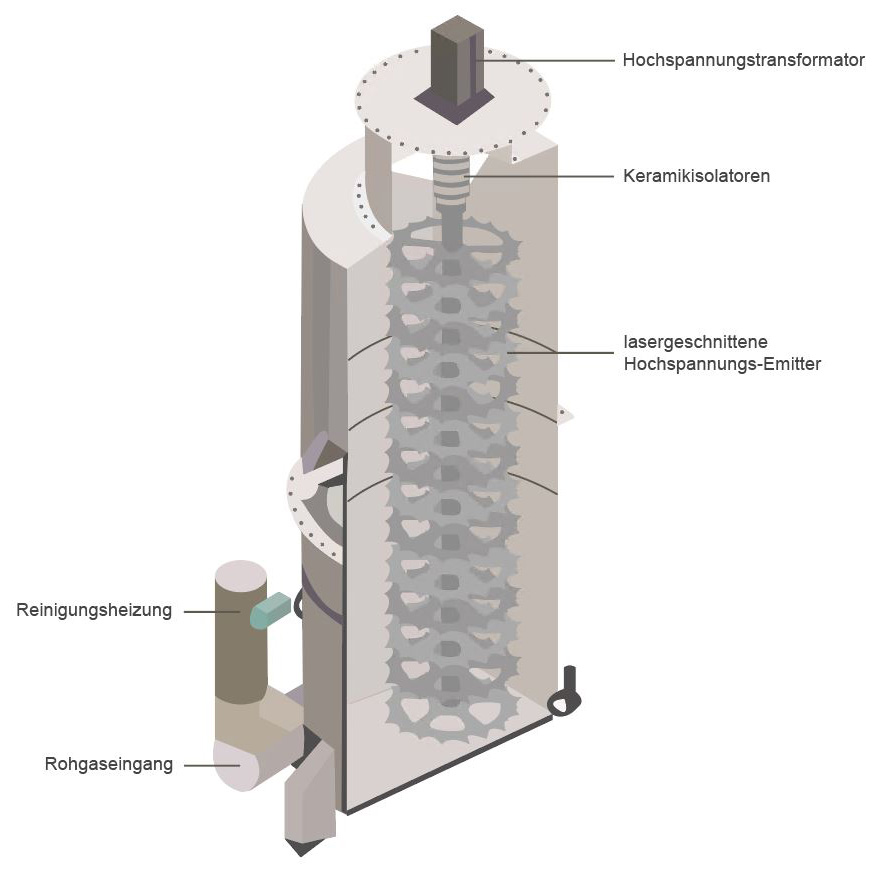
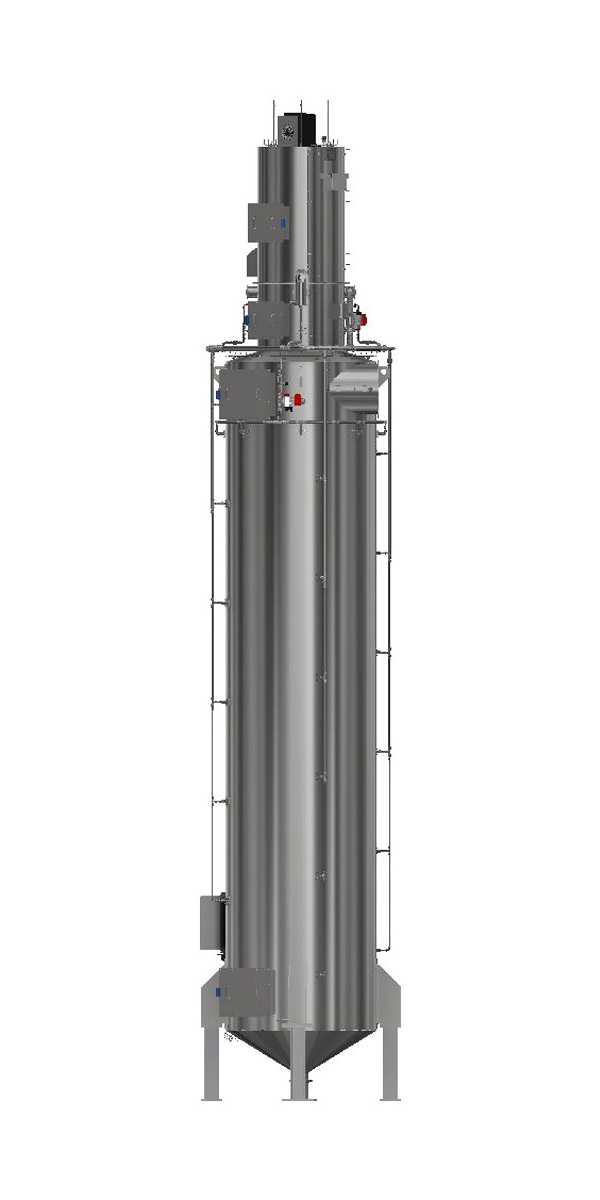
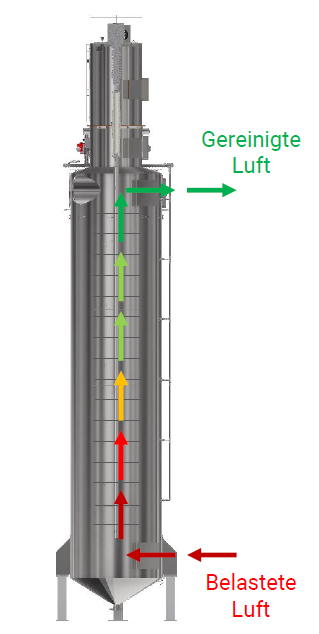
The AAIRMAXX® tube electrostatic precipitator is the heart of every KMA smoking solution. In vertical stainless steel tubes, a high-voltage electrode generates a strong electric field: tar, grease and oil mists are ionised, separated on the tube wall and flow automatically into the tar collection drum — with minimal energy expenditure.

Because the tubes clean themselves via an integrated hot air cleaning programme, filter replacement is eliminated. Separated tar flows automatically into the collection drum: no sticking, no downtime, constant performance over the entire service life.

There is no more efficient process for pure tar separation. For emission and odour limit values, we combine it — depending on requirements — in two ways: As a hybrid solution with a downstream wet scrubber or as a pre-filter combined with an electric RTO.

TUBE ELECTROSTATIC PRECIPITATOR + WET SCRUBBER

The proven hybrid solution: separate tar, wash out VOC

For emission and odour limit values, we combine the tube electrostatic precipitator with a downstream wet scrubber. The tasks are clearly separated: The electrostatic precipitator separates tar and aerosols, the wet scrubber absorbs volatile organic compounds and odours — according to the absorption principle, in a packed column using the countercurrent process.

The washing water circulates with a regulated pH value and is permanently operated at pH 10. In this range, legionella do not multiply: wet scrubbers with a permanent pH of 10 or more are excluded from the scope of the regulation according to § 1 of the 42nd BImSchV. For you, this eliminates the reporting obligation, recurring legionella tests and the operating log.

For special odour requirements, activated carbon can optionally be added.

Wash out phenols, aldehydes and VOC in countercurrent — without natural gas burners

Expandable by an activated carbon stage for stricter requirements

Can be installed frost-proof in a CPS container — without converting ongoing production

Effective exhaust air filtration


The AAIRMAXX® tube electrostatic precipitator separates tar aerosols, grease and oil mist highly effectively. The ionised particles are separated on the tube wall and flow automatically into the tar collection drum.

Separation of VOCs and odours

The downstream wet scrubber removes VOCs and odours in countercurrent with washing liquor. Optional UV light and activated carbon — without natural gas burners, with minimal energy consumption.

Unique cleaning system

An integrated hot air cleaning programme cleans the inner walls of the tubes automatically at programmable intervals. Separated tar droplets flow continuously into the depot container — without filter media changes.
New: Tube electrostatic precipitator + electric RTO (eRTO)

The alternative to thermal oxidation: Tube electrostatic precipitator plus electric RTO

Where the limit values for total carbon and especially methane are particularly strict, a new solution comes into focus: the electrically heated RTO (eRTO). It does not burn with natural gas, but works electrically — eligible for funding and, with electricity from renewable sources, without a CO₂ footprint.

The catch of the technology: The ceramic of the RTO is highly sensitive to tar aerosols and extremely maintenance-intensive without protection. Therefore, the eRTO is practically only used with an effective preliminary stage — the AAIRMAXX® electrostatic precipitator, which reliably protects the ceramic from tar. Without the KMA tube filter, there is no economical electric RTO.

Safely keep total carbon and methane below the limit value (e.g. 20 mg/m³ Ctotal)

Reliably protect the RTO ceramic from tar aerosols — no economical operation without a preliminary stage

Zero cubic metres of natural gas: no burner, no gas connection, no CO₂ tax

Operate with electricity from renewable sources without a CO₂ footprint

Electrification instead of natural gas: eligible for funding under federal energy efficiency programmes

Customer examples in the smokehouse sector

Three smokehouses that replaced thermal oxidation

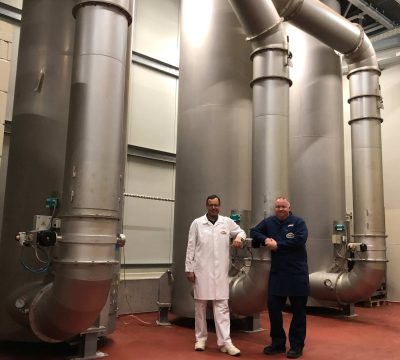
Mr Göhring and Mr Goder in front of KMA AAIRMAXX®_3

Schwarzwaldhof Blumberg –
Central system for 16,000 m³/h


How do you clean the smoke exhaust air of a ham production in 24/7 operation in an environmentally friendly way? Schwarzwaldhof decided against thermal oxidation and in favour of three AAIRMAXX® tube electrostatic precipitators plus wet scrubbers: 92% lower operating costs and 95% less CO₂ — 2,705 tonnes of CO₂ saved annually.
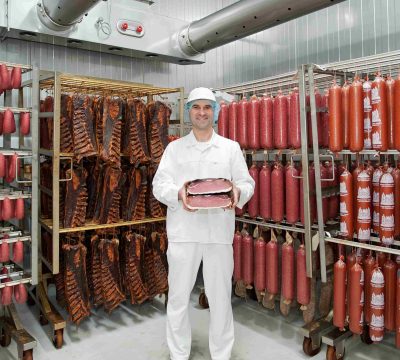
KMA smokehouse expert customer example Schwarzwaldhaus

Schwarzwaldhaus Gengenbach – Black Forest Ham


Can seven smoke chambers be connected to a single filter system? At Schwarzwaldhaus, an AAIRMAXX® container solution (CPS) with 3,000 m³/h takes over the central exhaust air filtration for four cold and three hot smoking systems — installed frost-proof outdoors, without converting the existing production.
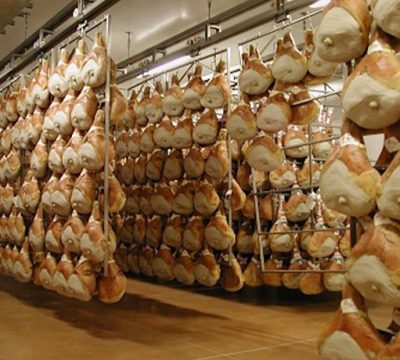
Meat and sausage products in smokehouse exhaust air treatment

Italian meat production – AAIRMAXX 2250 CPS


How do you scale exhaust air filtration across multiple locations? When expanding production by four hot smoking systems, an Italian sausage manufacturer chose the AAIRMAXX® 2250 as a frost-proof outdoor system. Result: 85% lower operating costs, CO₂ load reduced from 213 to 11 tonnes.
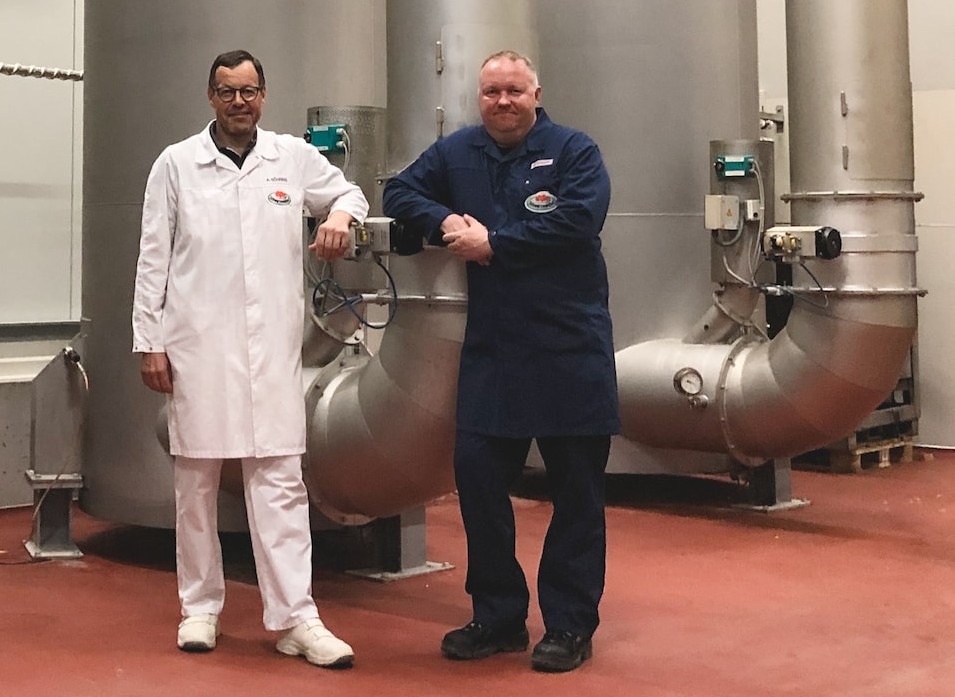

“We smoke not only economically, but also environmentally consciously.”

Andreas Göhring, Division Manager, Schwarzwaldhof Fleisch und Wurstwaren GmbH

Frequently asked questions about exhaust air filtration in smokehouses

The decisive step is the early separation of the sticky tar, grease and oil aerosols. The KMA tube electrostatic precipitator was developed specifically for thick, tarry smokehouse exhaust air: The particles are electrostatically charged and deposited on the earthed stainless steel walls; a hot air cleaning programme automatically removes the contamination. This is proven by systems with over 50,000 operating hours. Following the tar separation by the electrostatic tube filter, the exhaust air reaches the downstream odour or fine cleaning stages by means of a fan. This protects these components from the typical tar load.

Biofilters are a proven process for odour reduction, but in our view, they are only suitable to a limited extent for exhaust air from smokehouses. Without natural gas, without chemicals, with low operating costs and a good CO₂ balance, they are a good solution for water-soluble, biodegradable volatile organic compounds (VOC) and odours — which is why we use them ourselves where they fit. However, they are not among our usual recommendations for smokehouses.

This is mainly due to the particle load of tar and grease aerosols in the smoking exhaust air. These aerosols are not broken down in the biofilter, but deposit on the carrier material and close the structure. The disposal of the contaminated carrier material and the PAH-contaminated wastewater is expensive.

In addition, concentrated smoking exhaust air does not provide a good environment for the development of microbial cultures. To counteract this, the smoking exhaust air must usually be mixed with other exhaust air streams and treated in combination. With the larger exhaust air volume, the required size of the biofilter grows, so that the available installation space can become a bottleneck. And we know of cases where residents have complained about the inherent odour of the biofilter.

For smokehouses, we therefore recommend other solutions. We treat the exhaust air as it occurs — warm, moist and tar-laden. The tube electrostatic precipitator separates tar and aerosols at operating temperature; subsequent process stages such as a wet scrubber or an electrically operated RTO specifically treat VOC and odours.

The tubes of the electrostatic precipitator are cleaned automatically via an integrated hot air cleaning programme; a classic filter media change is eliminated. Separated tar droplets flow continuously into a collection or depot container. How often this needs to be emptied depends on the smoking process, product mix and operating intensity.

The exhaust air filtration is designed for the requirements applicable at the location and the actual raw gas load. Depending on the task, KMA combines tar separation with further stages for the reduction of gases, vapours and odours. Which configuration is necessary can therefore only be determined reliably on the basis of the process and permit data.

KMA technology starts with the exhaust air and not with the recipe or the actual smoking process. The filter is located behind the smoke chamber in the exhaust air path. It does not interfere with smoke guidance, smoke density, temperature profile or chamber control. Smoking process, wood, smoking time and recipe remain unchanged. The goal is to capture and clean emissions after the process without changing the desired smoking result. The specific integration is designed so that the existing production parameters are maintained.

Yes, KMA solutions are used for different smoking processes and product groups – from meat and sausages to fish, cheese and specialities. All common processes are covered: smouldering smoke, friction smoke, hot, warm and cold smoking as well as smoke aroma or liquid smoke. The connection is made independently of the manufacturer to the chimney outlet of the chamber. Decisive for the design are not so much the product itself as the exhaust air flow rate, temperature and tar and odour load. These values differ significantly depending on the process.

No. Several smoke chambers can be combined into a central exhaust air filtration system if volume flow rates, operating times and simultaneity are taken into account accordingly. Whether a central or decentralised solution makes more sense depends primarily on the system layout, pipe routes and production process.

This depends on the process and the target value. Particles, tar and aerosols are separated by the tube electrostatic precipitator; volatile carbon compounds require a second stage — wet scrubbers based on the absorption principle, a carbon stage as a final stage or an eRTO. Which combination your case needs results from the raw gas and the permit value.

Depending on the emission requirement, a multi-stage KMA solution can replace thermal oxidation and clean the exhaust air without natural gas combustion. For particularly strict requirements, an electrically heated RTO can also be considered, whereby the upstream tar separation protects the sensitive ceramic. Which variant fits depends on the raw gas load and the required clean gas value.

profile-pic (19)

Ansgar Dobers

Sales Manager
+49 2244 9248 42

Your direct contact

Talk to Ansgar Dobers

Would you like to safely get a grip on the odour and emissions of your smoking system? And with the lowest possible maintenance effort?

Then we will check together which exhaust air filtration fits your system.

clean air.
save energy.

>3,000

Systems installed worldwide

80 %

Energy savings possible compared to conventional exhaust air technology

360°

Emissions, exhaust air, and energy considered together

1.500+

Customers worldwide trust our technology

Our Solutions in the Trade Press

Publications & Technical Articles

We are the expert

Further Applications

Rügenwalder Produktion fertige V-Frikadellen_web

Deep-frying

Exhaust air filtration & heat recovery
for deep-frying and cooking lines

Potential for deep-frying & cooking

Further Information

Downloads & Links

Laws & Guidelines

EU BREF Directive

TA-Luft: Air Pollution Control – Emission Limit

VDI 2262-3: Air Quality at the Workplace – Recirculation of Clean Air

TRGS 900: Occupational Exposure Limits