Products and technologies – modularly combinable
Industrial exhaust air filter Systems
with heat recovery
Whether particles, smoke, odours or VOC – here you can see the complete modular system at a glance: series, modules and how they can be combined.
Our modular system for industrial exhaust air filter systems
Our solutions combine high energy efficiency with maximum separation efficiency and convenient maintenance. Whether emissions, VOC, particles, smoke or odours: our cross-industry industry expertise and process understanding create a solution that precisely meets your requirements. All our technologies are backed by four KMA performance promises: high energy efficiency, effective exhaust air purification, high-performance heat recovery, and integrated cleaning.
At the heart of our process engineering are the electrostatic precipitator product lines ULTRAVENT® and AAIRMAXX®. Configurable for exhaust air volume from 1,000 to 200,000 m³, they can be flexibly expanded with heat recovery and additional modules for enhanced odour filtration or VOC separation. This enables separation efficiency of up to 99% while also delivering noticeably lower energy and operating costs.

High
Energy efficiency

Effective
exhaust air purification
High-performance
heat recovery

Integrated
cleaning systems
The ULTRAVENT® product family
ULTRAVENT® is the system solution for electrostatic exhaust air purification. It is designed for a wide range of process requirements and is suitable both as a compact standard unit and as a high-volume version, making it highly flexible in use. Depending on volume flow and operating conditions, the ULTRAVENT® III, M, H and T variants can be expanded with heat recovery, automatic cleaning and additional functional modules. The result is a tailored, energy-efficient solution for separating particles, aerosols, smoke, volatile organic compounds (VOC) and odours.
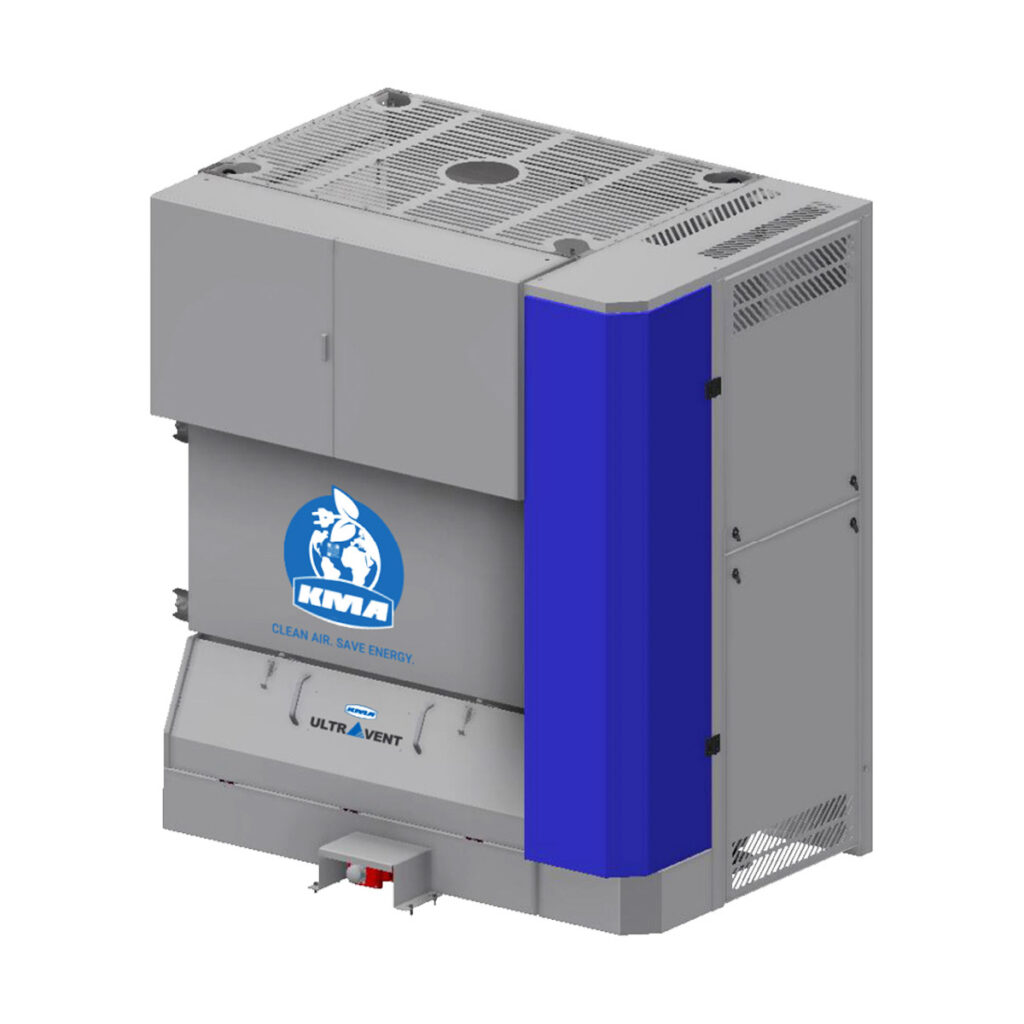
The benchmark for modern exhaust air filters in the 3rd generation
✓ Best-in-class exhaust air filtration & energy consumption with a strong standard specification.
✓ Integrated plug-and-play solution with double electrostatic precipitator, fan, CIP and control cabinet – 3,000 systems installed worldwide.
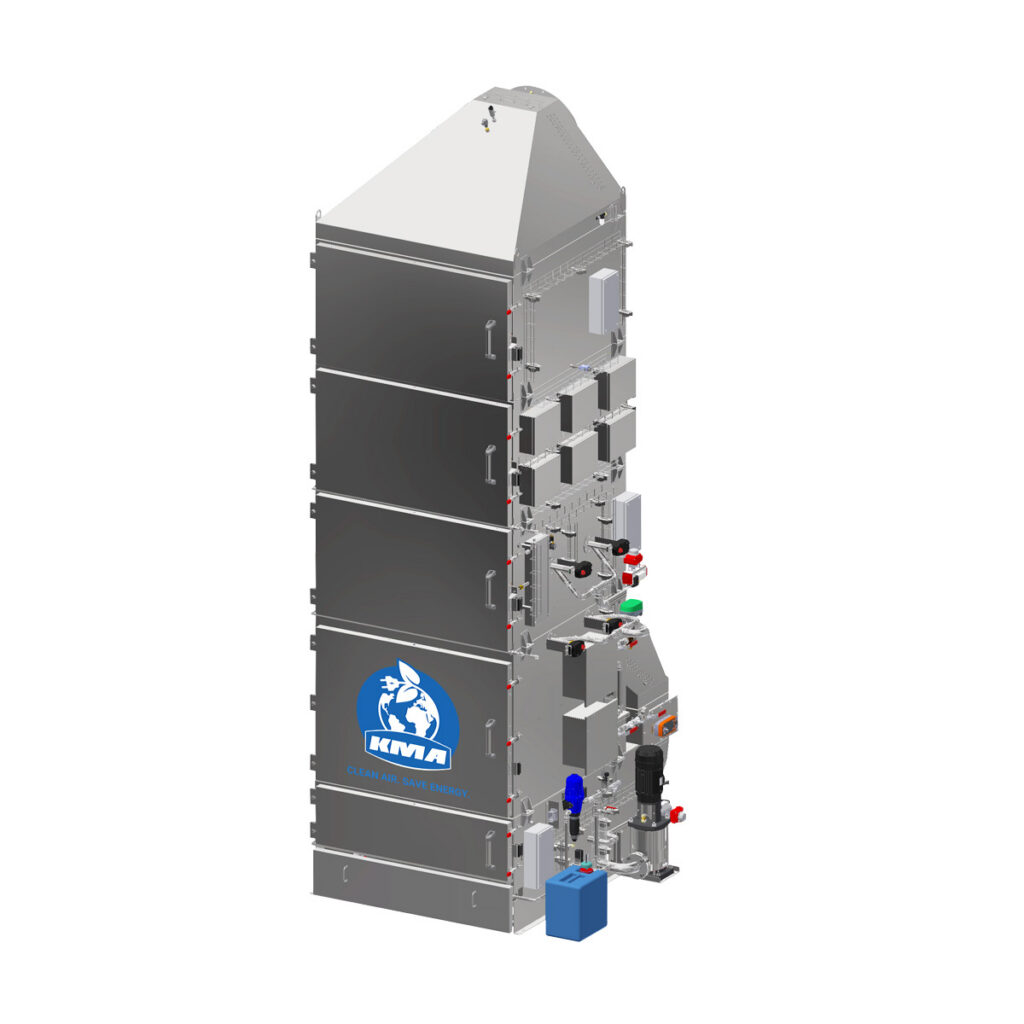
The modular filter system with
flexible process modules
✓ Modular process system for demand-oriented exhaust air purification and compact heat recovery.
✓ All-in-one all-rounder with minimal footprint and fully integrated cleaning.
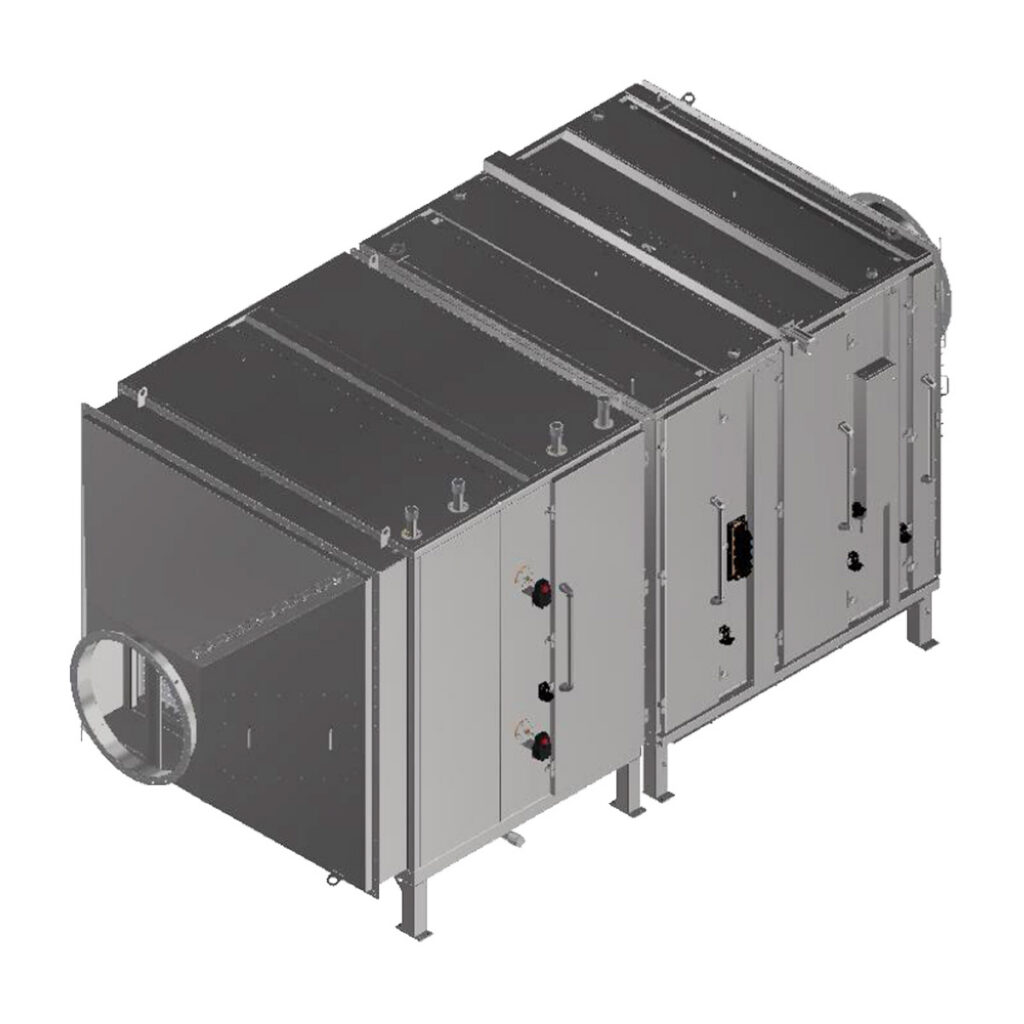
Horizontal and modular large-size electrostatic filter system
✓ Designed for large exhaust air volumes from 30,000 m³ with horizontal flow-through.
✓ Also in combination with heat recovery and high temperatures up to 200 °C.
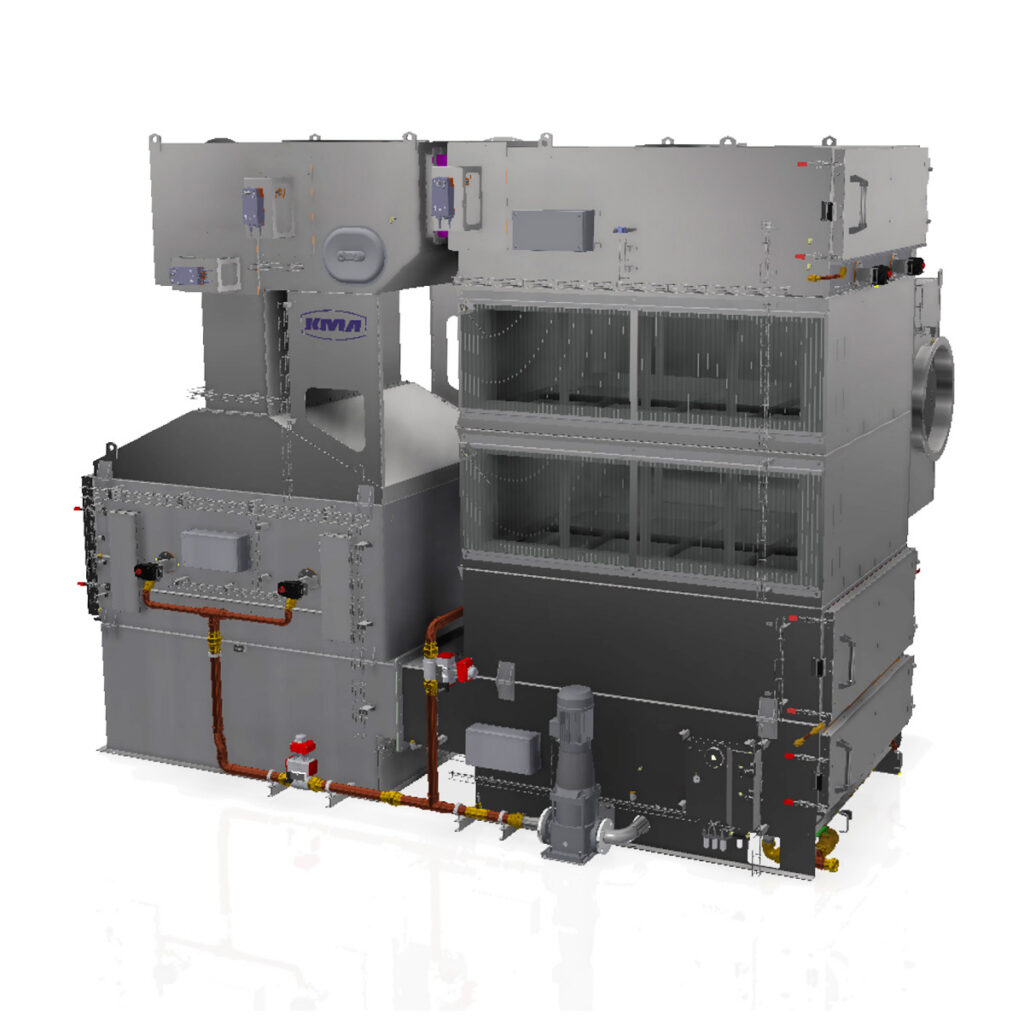
Tandem system: heat recovery optionally with or without exhaust air filter
✓ 2 components for exhaust air purification and heat recovery for demanding processes up to 200 °C.
✓ Many energy recovery options and flexible ESP retrofit option.
The AAIRMAXX ® product family
AAIRMAXX® is the exhaust air filter for electrostatic exhaust air purification in tubular design. The three variants ESP, REF and CPS cover a broad range of industrial applications. This ranges from compact standalone units and flexibly designed tube bundle filters to ready-to-connect hybrid container solutions with wet scrubber. AAIRMAXX® therefore offers an energy-efficient, low-maintenance and high-performance solution for separating particles, aerosols, smoke and other airborne emissions for a wide variety of requirements.
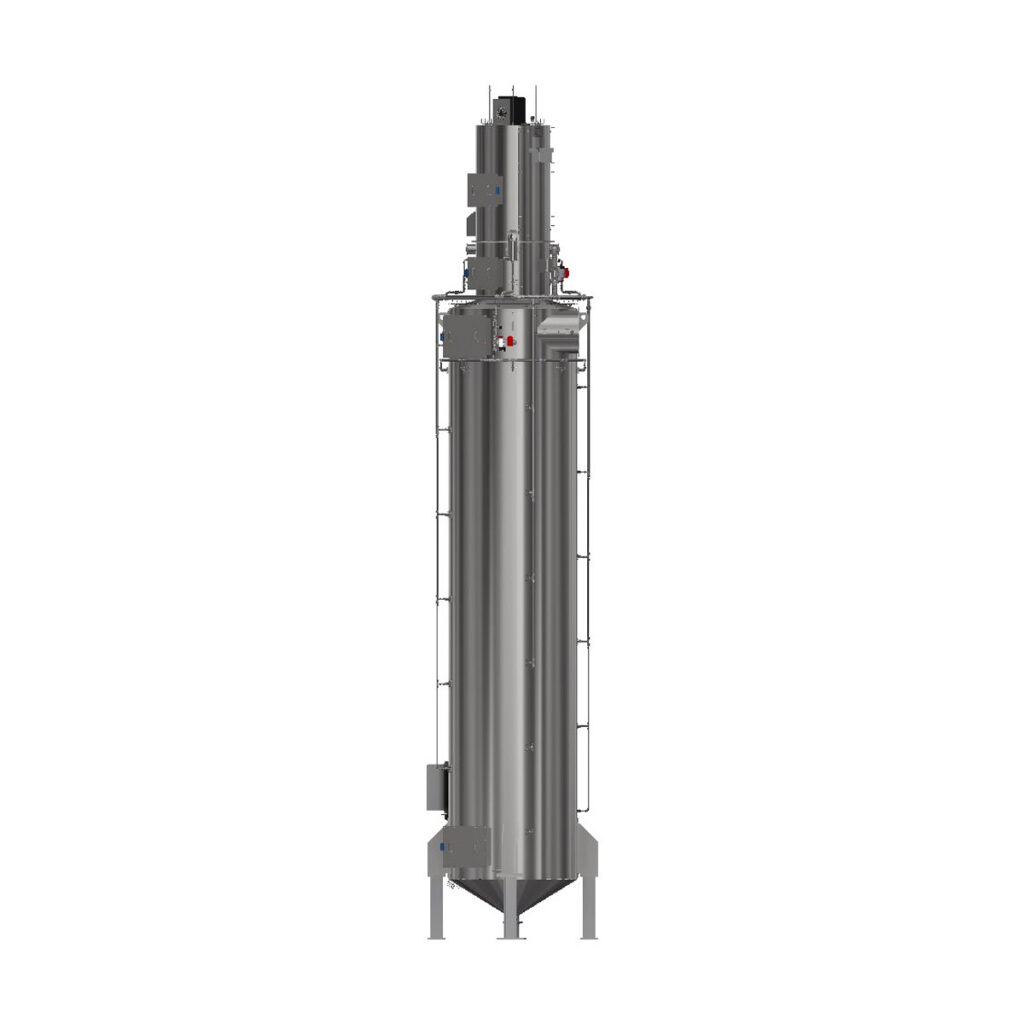
AAIRMAXX® ESP
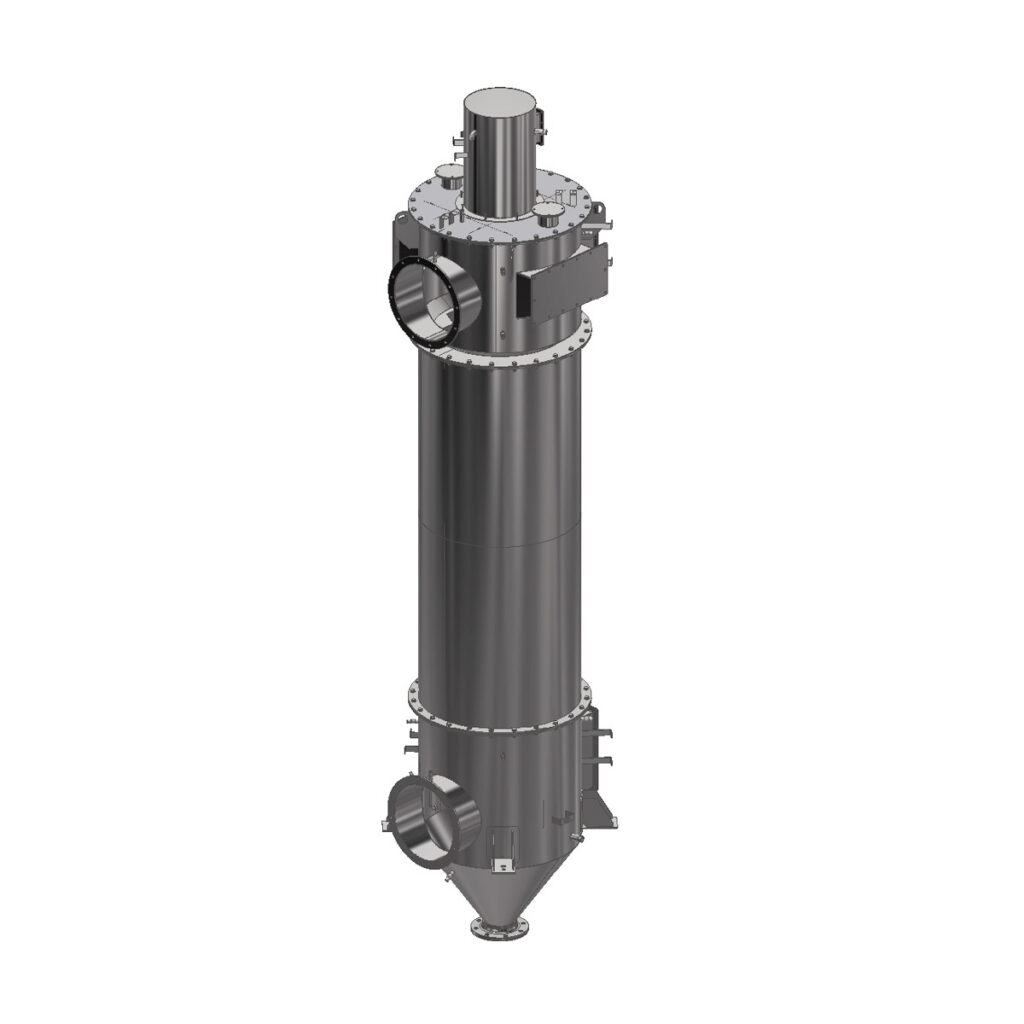
AAIRMAXX® REF
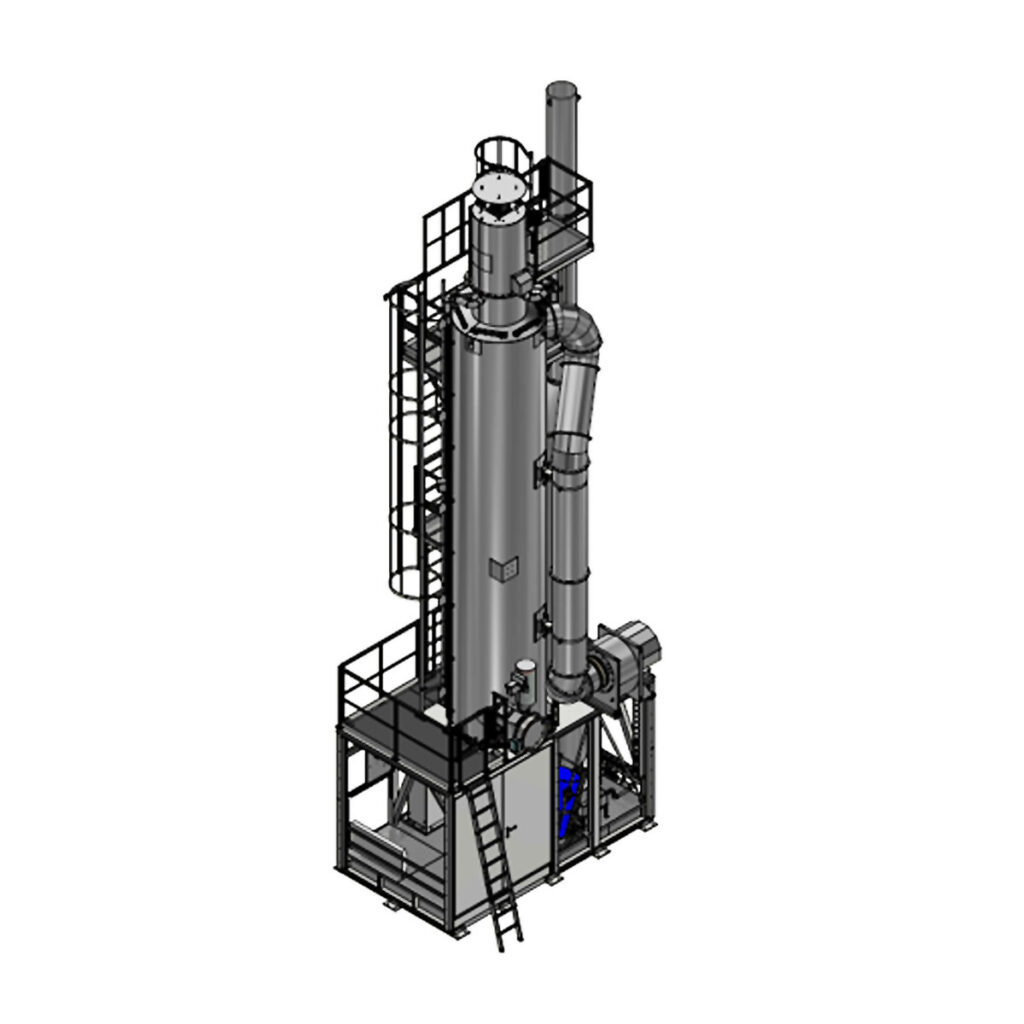
AAIRMAXX® CPS
Additional products and technologies
More technical highlights in the KMA modular solution system
Heat recovery
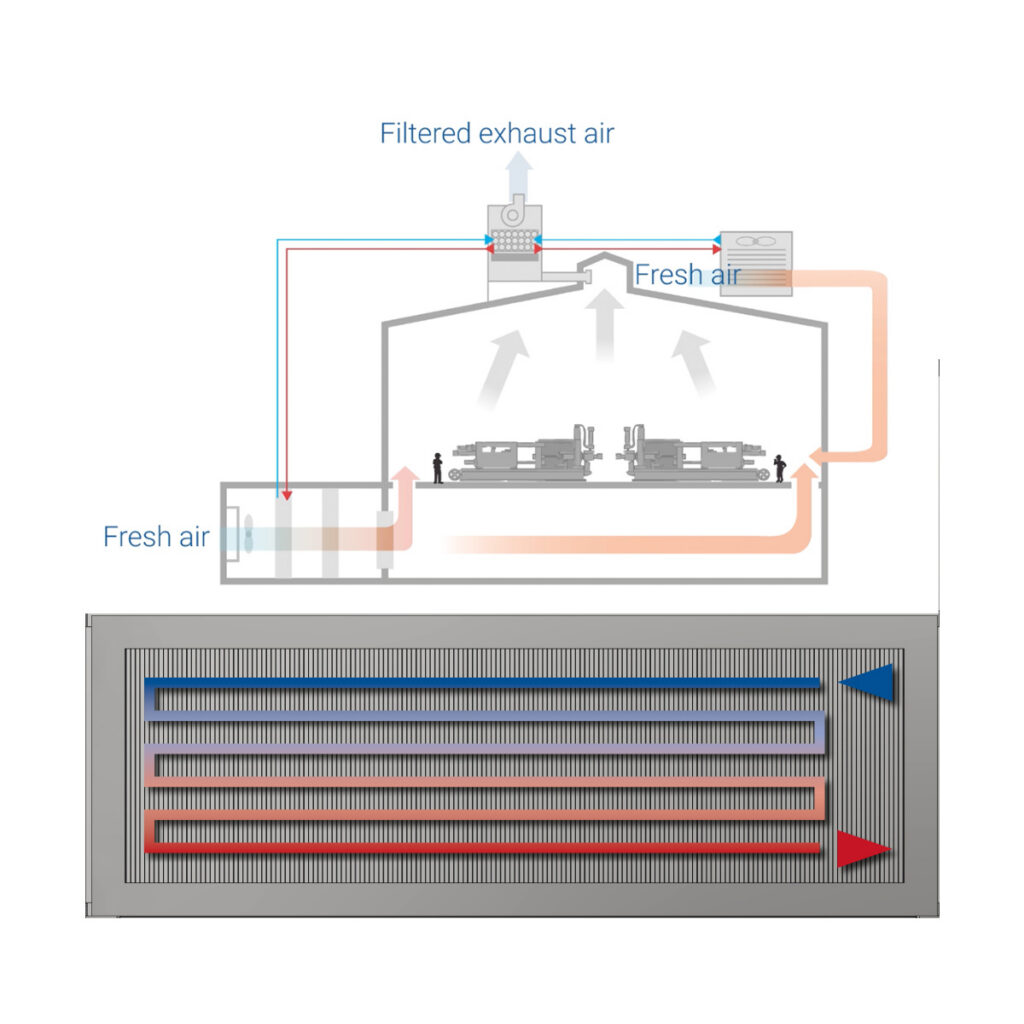
Use waste heat
Integrated or separate systems for recovering heat from exhaust air, supporting a sustainable and efficient production process.
Automatic Cleaning system
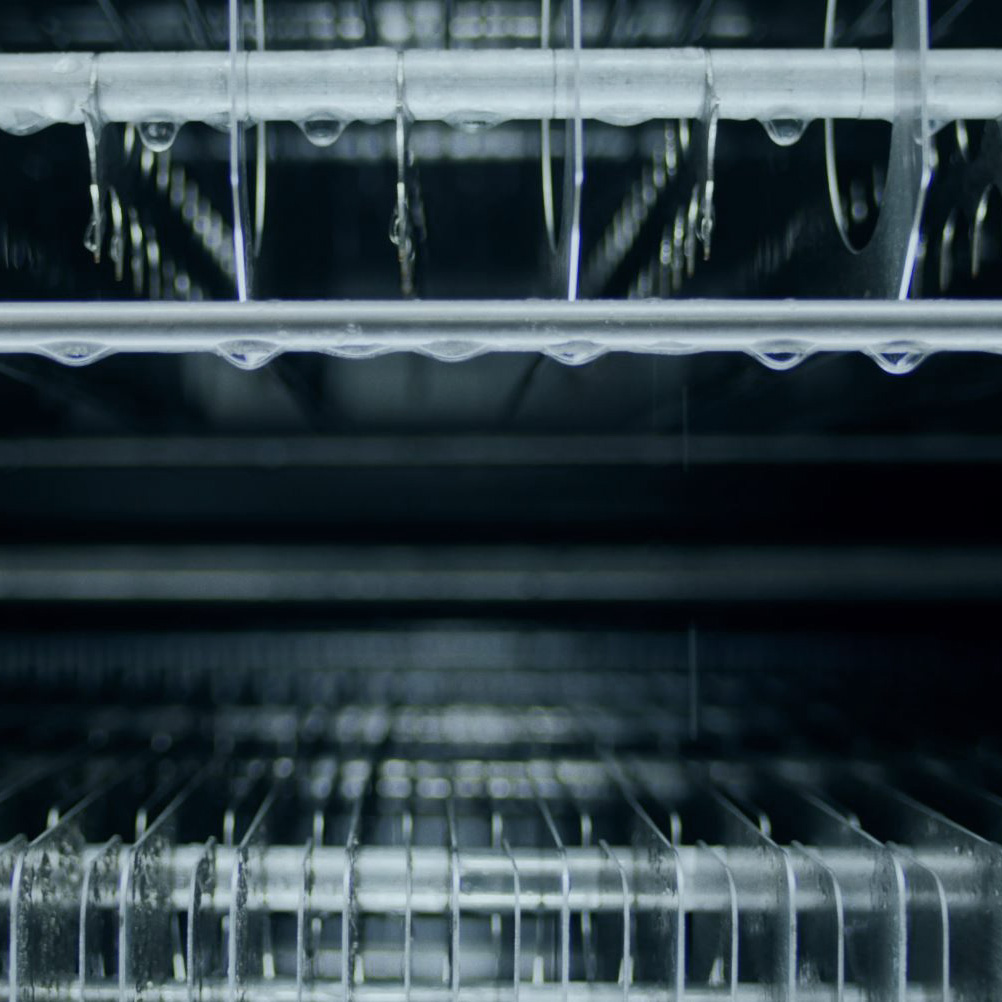
Cleaning-in-Place (CIP)
Automatic cleaning of the filter stages and the heat exchanger, for example using rotating spray bars.
smoke extraction system
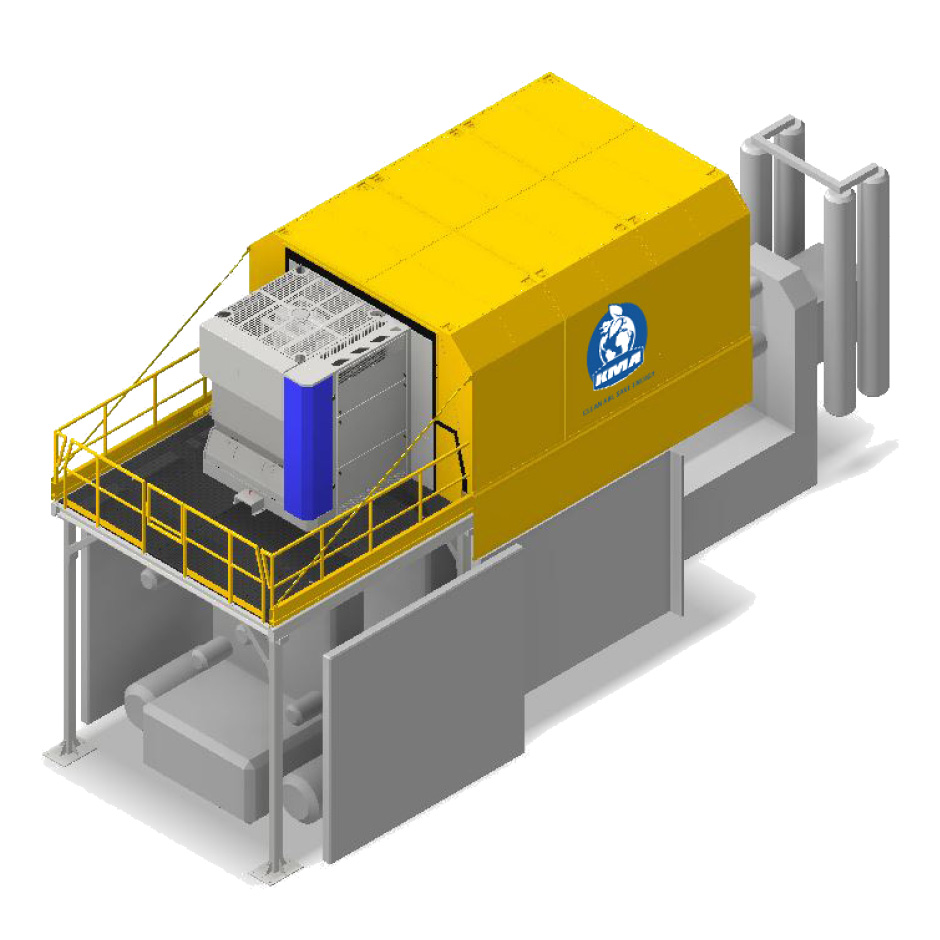
Capture at source
Capture and extraction of smoke, e.g. from welding, soldering or grinding processes, directly at the point of origin.
ESP + electric RTO
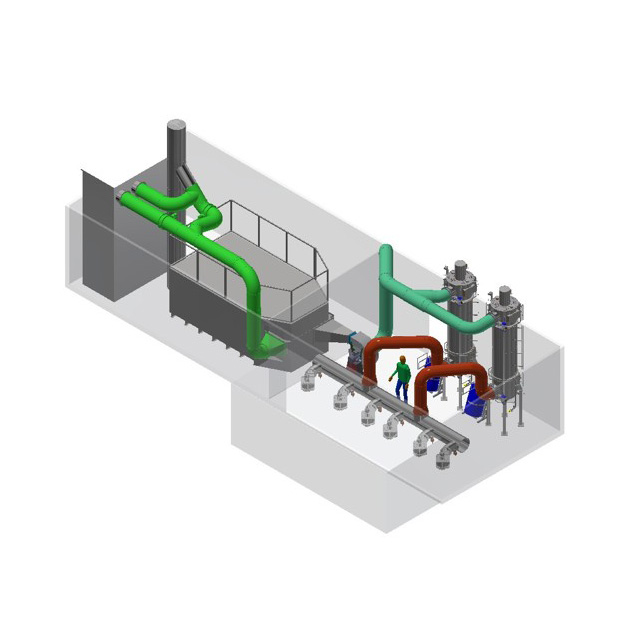
Oxidation without natural gas
The eRTO runs on electricity rather than natural gas. The AAIRMAXX® electrostatic precipitator reliably protects its sensitive ceramic components from contaminants such as tar.
Wet scrubber
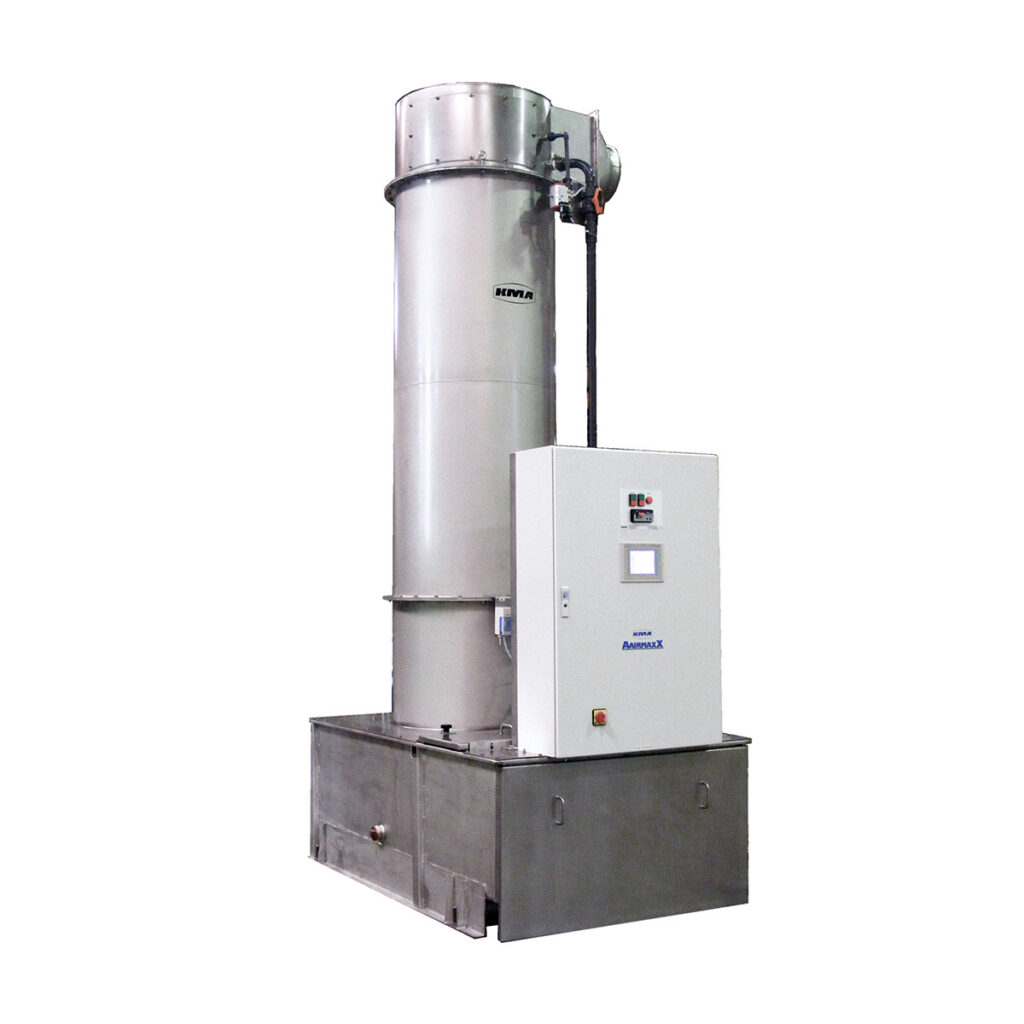
Washing out water-soluble substances
A usually alkaline solution is sprayed into the pre-filtered exhaust air stream, absorbing water-soluble, volatile substances.
Carbon modules
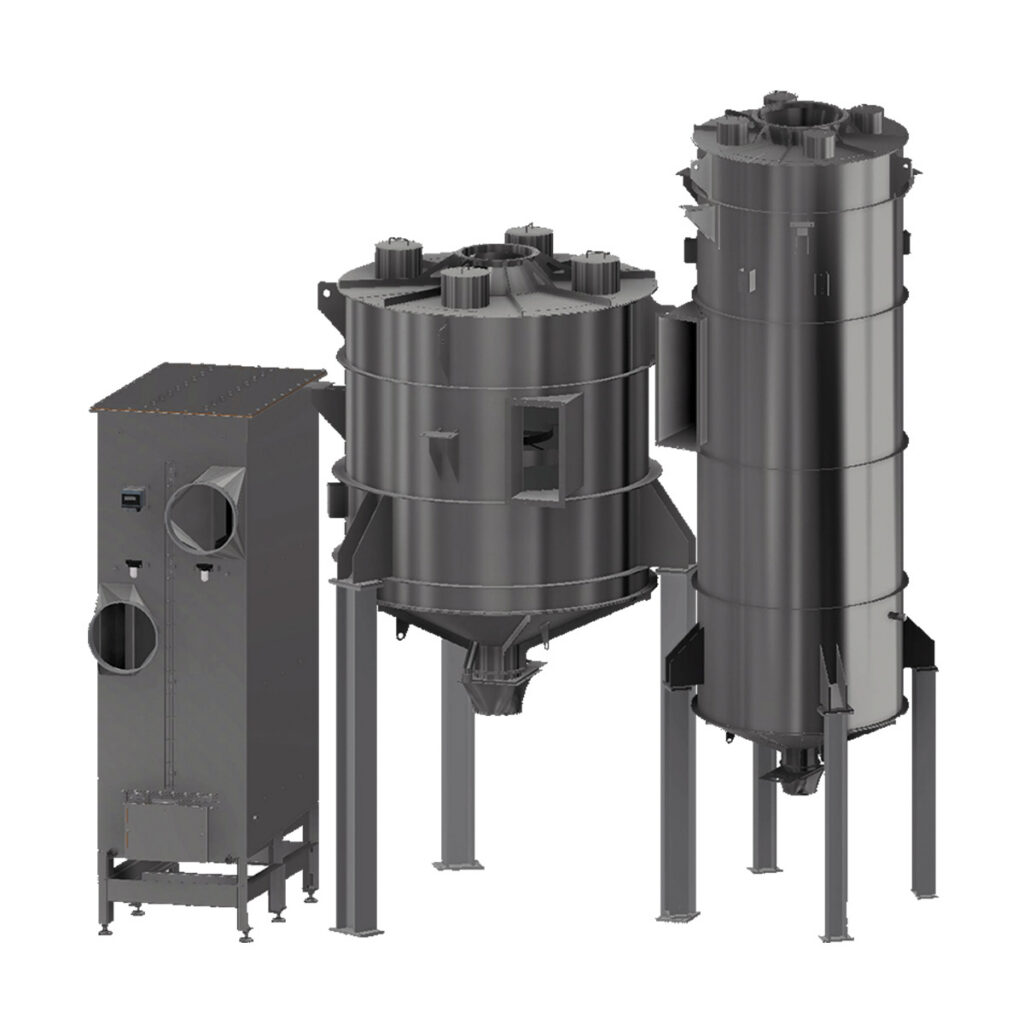
Adsorption of odours and VOCs
Space-saving carbon filters or cylindrical stainless-steel carbon towers for removing volatile substances and odours.
Biofilter
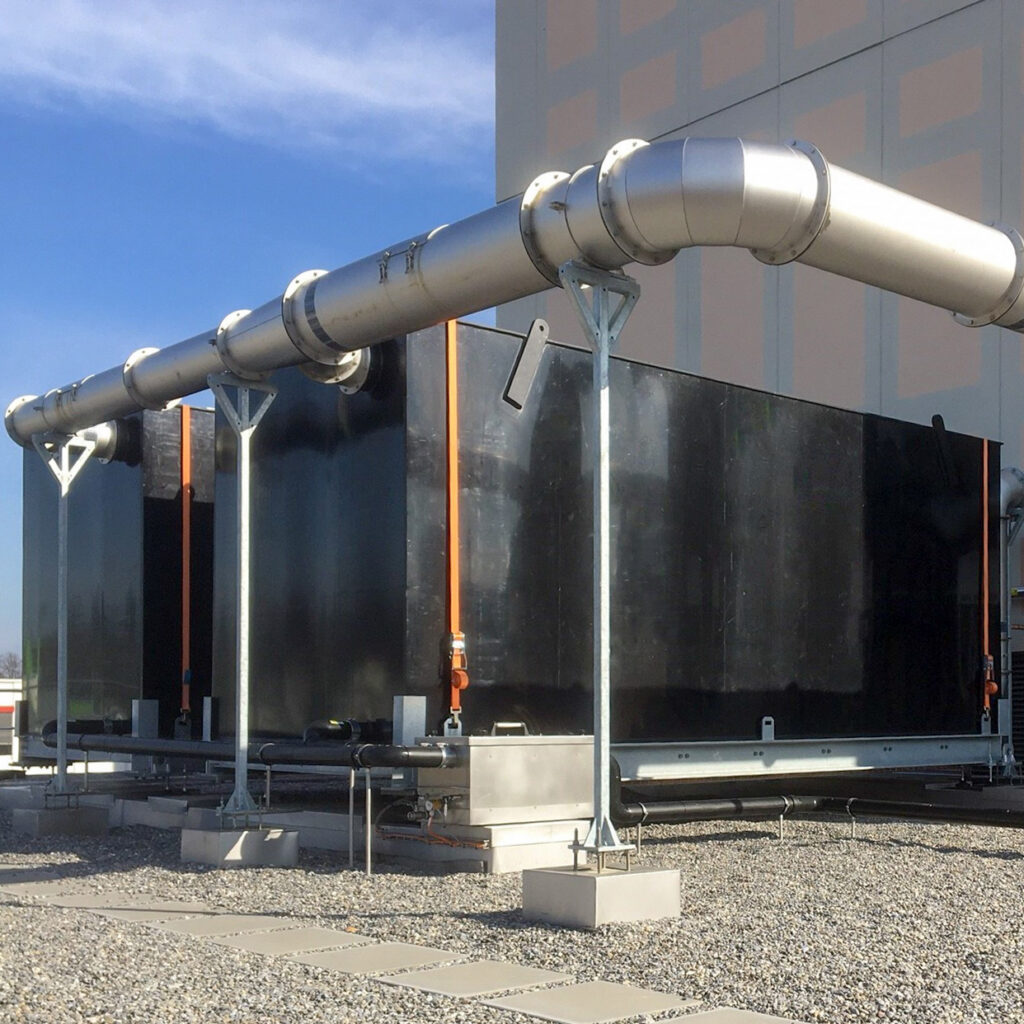
Degradation by microorganisms
Separation of volatile substances and odours in combined use with an upstream packed-bed scrubber to pre-condition the exhaust air.

FAQ — Questions about industrial exhaust air filter systems
Which process is suitable for which type of emission?
The choice depends on the physical state and solubility of the pollutant, not on the industry. Particles, smoke and aerosols containing oil, grease and tar are separated by electrostatic precipitation. Water-soluble gaseous substances are captured by a gas scrubber or wet scrubber. Depending on the load, volatile organic compounds and odours require a carbon stage for adsorption, UV light for oxidation, a biofilter for microbial degradation or — in the case of high VOC concentrations — an electrically heated RTO, which KMA integrates into the plant in collaboration with specialist manufacturers. A heat exchanger recovers usable heat whilst simultaneously condensing out some of the VOCs. In practice, there is rarely just one type of substance present; therefore, the stages are combined.
Why use electrostatic filtration rather than mechanical filtration?
This is because an electrostatic precipitator extracts the particles from the air stream rather than forcing the air through a filter medium. In the electric field, particles and aerosols become charged and are collected on earthed plates or tubes; the air flows through almost unimpeded. This results in three practical advantages: the pressure drop remains low, which reduces the load on the fan and lowers electricity consumption. There is no filter medium that can become clogged — a crucial factor when dealing with sticky, oily or tar-containing emissions. Furthermore, there is no need for the recurring replacement and disposal of filter media; instead, the KMA electrostatic precipitator cells are automatically cleaned within the housing. Mechanical pre-treatment stages such as demisters or lint filters are nevertheless retained.
How can I be sure that I’m being recommended the right process — and not just whatever you have in your range?
Because the choice is not limited by a product range. KMA systems utilise electrostatic precipitators in both plate and tube designs, heat exchangers, UV light/ozone, carbon stages, gas scrubbers, biofilters and electrically heated RTOs — depending on what the task requires. Design, integration and responsibility for the entire system remain in a single set of hands, even when specialist partners are involved. A recommendation therefore need not favour one process over another simply because another is unavailable. Every design is based on your process data: flow rate, temperature, type and concentration of emissions, and the required clean gas quality. These values determine the necessary technology. Our role as a solutions provider is to assemble the modular system in such a way that it solves your problem as efficiently and effectively as possible — no more stages than necessary, no fewer than required.
Do I need two systems or just one for exhaust air treatment and heat recovery?
One. Both can be combined in a single system, and technically this is actually the better solution: the heat exchanger cools the exhaust air before it reaches the filter stages, causing some of the volatile compounds to condense and thereby reducing the load on the downstream stages. Conversely, an upstream separator protects the heat exchanger from contamination. However, both components can also be installed separately — for example, if the initial aim is simply to reduce energy costs, with the filter stage to follow later. The product pages show which series offers which combination.
What is the pressure drop in your electrostatic precipitators, and what does this mean for the fan and electricity consumption?
Significantly lower than with mechanical filters. Depending on its design, a multi-stage electrostatic precipitator operates at around 130 pascals, whilst bag or cartridge filters generate many times that amount — and this resistance must be continuously overcome by the fan. Power consumption is correspondingly low; the filter cells themselves require less than 1.25 kW. For you, this means two things: in many cases, the existing fan is sufficient, so there is no need to modify the ventilation system. And electricity consumption remains predictable over the operating period, because the pressure drop does not increase during automatic cleaning.
Why should I pay attention to how a filter unit is cleaned?
Because a separation efficiency only counts if it is maintained over the years. Every filter stage becomes contaminated during operation: oil and particles build up on the plates or tubes of the electrostatic precipitator, heat exchanger surfaces lose their heat transfer efficiency due to deposits, and a clogged filter medium increases the pressure drop and thus power consumption. If cleaning is carried out manually at intervals, performance declines continuously between cleanings. An integrated cleaning system, which automatically cleans filter stages and heat exchangers in situ using rotating nozzle assemblies, keeps both the separation efficiency and heat transfer constant. That is why the issue of cleaning must be included in any comparison of quotations.
What information do you need to suggest a process to me?
As much or as little as you have to hand. Five pieces of information are helpful for an initial proposal: the process and the material being processed, the exhaust air flow rate, the exhaust air temperature, the type and quantity of pollutants — particles, aerosols, smoke, odours, VOCs — and the operating hours. In practice, hardly any business has all these figures to hand; the exhaust air system is rarely the focus of day-to-day production. This is no obstacle: older test reports or the approval notice often provide useful information, and our experts will determine everything else in consultation with you or during an on-site assessment of the process. So please do get in touch, even if you do not yet have all the figures.
Is my exhaust air volume too small or too large for this process?
As a general rule, no. Individual filter systems cover a range of approximately 2,000 to 30,000 m³/h; by connecting several systems in parallel, systems with capacities in the six-figure range can be achieved — flow rates ranging from 1,000 to 200,000 m³/h can be configured. However, more important than the air flow rate itself is how it is achieved: effective capture directly at the emission source keeps the volume of air to be treated small and, consequently, also keeps the system, the investment and the running costs low. You can find out which product range covers your requirements on the product pages.
Your contact at KMA
How can we help?
Briefly describe your request. We will get back to you personally. If necessary, we will forward your message to the appropriate expert.
We put our trust in KMA

























Our solutions in the trade press