Exhaust Air Filtration
&
Heat Recovery
in Plastics Processing
Clean process exhaust air and recover heat – in one system. Field-proven with numerous plastics and rubber processors.
The Green Competitive Advantage for Your Plastics Processing
We are your experts for emissions, waste heat, and energy in plastics, silicone, and rubber processing.
Plastics processors are specialists — and every exhaust air stream is different. We know the emission and energy issues specific to your process. The right technology is determined by your exhaust air — not a standard concept.
Whether extrusion, vulcanisation, compounding, film production, tempering ovens, or recycling: the type and concentration of aerosols, odours, moisture, and temperature determine the suitable solution. We precisely tailor electrostatic precipitators, heat recovery, and odour reduction to these factors.
Two things are decisive: clean air and low energy costs. You must comply with stricter emission limit values — without your exhaust air filtration becoming a cost driver.
Traditional methods like thermal oxidation consume enormous amounts of energy. Modern electrostatic precipitators with heat recovery comply with limit values, consume up to 98% less energy, and make your process waste heat usable as a resource.
That is your green competitive advantage.
"Instead of thermal oxidation at over 750 °C: energy-efficient electrostatic precipitator cleaning. 525 t CO₂ and over €240,000 less in energy costs per year."
VALEO (Vulcanisation)
"Outdated electrostatic precipitators were maintenance-intensive. The new system cleans itself automatically (CIP) — reliably and with low maintenance."
Freudenberg (technical textiles)
"Bag and HEPA filters clogged with sticky particles. The two-stage electrostatic precipitator system eliminates expensive filter replacement."
Treffert (Masterbatch)
"Plastic deposits on the roof, pipes, and fans required constant cleaning. Since the new exhaust air filter, they have disappeared."
Nitto (Film Extrusion)
“10,000 m³/h of exhaust air from four extruders: compliant with the Technical Instructions on Air Quality (TA-Luft) and free from plasticiser odours, thanks to a double electrostatic precipitator and activated carbon.”
Neidhardt Rohstoff (compound manufacturer)
‘A self-cleaning electrostatic precipitator acting as a pre-filter protects the downstream vacuum pump and ensures consistent component quality.’
Extruder degassing (application example)

Comply with limit values

Reduce energy costs

Utilize process heat
Which application in plastics processing can we support you with?
Specialist publication BEST-PRACTICE — PLASTICS AND RUBBER PROCESSING
Securing the location with environmental technology
KGK – Kautschuk Gummi Kunststoffe (Issue 4/2025): This best practice article shows, with several plastics and rubber processors, how diverse the exhaust air and emission challenges in the industry are — and that each company has found its own, economical solution. The range extends from automotive suppliers to rubber specialists and masterbatch manufacturers to film extruders and compounders: Valeo cleans its vulcanisation exhaust air with electrostatic precipitators instead of thermal oxidation, saving around €240,000 and 525 t of CO₂ per year; Kraiburg Elastik uses the recovered waste heat to heat production halls; Treffert ends expensive filter replacement for sticky particles; Nitto gets rid of plastic deposits on roofs and equipment; and Neidhardt complies with TA-Luft limit values without plasticiser odours. This allows you to see at a glance which solution suits your process — and what can be achieved with it.
Specialist publication BEST-PRACTICE — VALEO WIPER SYSTEMS
How Valeo cleans its vulcanisation exhaust air energy-efficiently
At the Bietigheim-Bissingen site, Valeo now cleans the vulcanisation exhaust air from its wiper blade extrusion with an electrostatic precipitator system instead of energy-intensive thermal oxidation. The result: around €240,000 lower operating costs and a reduction from 525 to 12 t of CO₂ per year — with additional heat recovery and automatic cleaning. We show how the system is structured and why Valeo is converting further lines in the detailed practical case study.
We put our trust in KMA


Modern exhaust air filter system with heat recovery
Depending on the industry and production process, the specific requirements for the exhaust air filtration process vary.
Our modular process modules can be combined in many ways and individually configured. Depending on the requirements,
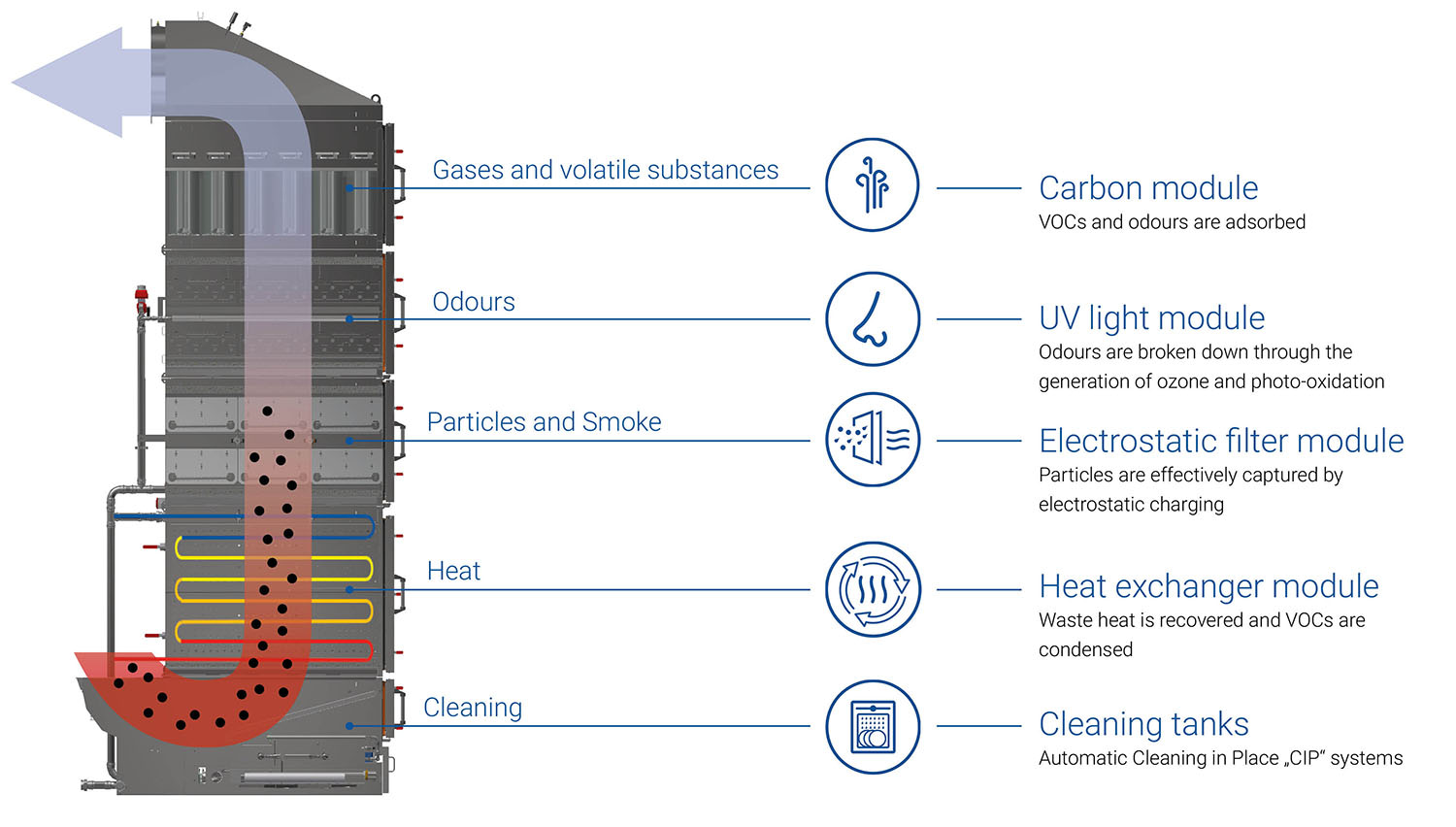
the ULTRAVENT® M enables the separation of particles and odours, VOCs, and the recuperation of heat from the exhaust air.
Exhaust Air Filtration
Electrostatic precipitator efficiently separates smoke as well as oil and plasticiser aerosols — low energy, no filter replacement.
heat recovery
Integrated heat exchangers utilize process waste heat, increase energy efficiency, and reduce operating costs.
Odour Separation
Activated carbon and fine filters reliably bind odours and plasticiser fumes, ensuring clean, odour-free exhaust air.
Cleaning system
Automatic CIP cleaning: keeps the filter modules clean automatically — constant performance, minimal maintenance effort.
clean air.
save energy.
>3,000
Systems installed worldwide
80 %
Energy savings possible compared to conventional exhaust air technology
360°
Emissions, exhaust air and energy. Engineered together.
1,500 +
Customers worldwide trust our technology
Customer examples in the field of plastics, rubber, and silicone
KMA solutions in use – across plastics processing
Hardly any process is identical to another – accordingly, our spectrum of solutions for exhaust air filtration and heat recovery is broad. Whether extrusion, compounding, masterbatch, or vulcanisation – each process has its own exhaust air and heat issues. How an integrated overall concept of exhaust air and supply air looks can be seen below using the example of Kraiburg Elastik.

Masterbatch production:
No more expensive filter replacement
In masterbatch production, bag and HEPA filters repeatedly clogged with sticky particles — requiring extensive cleaning and expensive filter replacement. A two-stage electrostatic precipitator from KMA separates 99% of particles and eliminates the costly replacement of filter inserts.
Film extrusion (PP/PE):
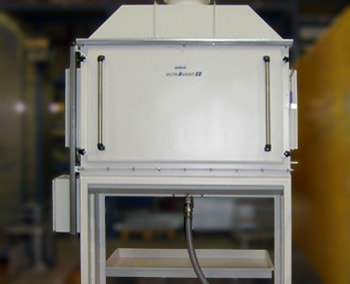
Clean exhaust air instead of deposits
During the extrusion of packaging films, the exhaust air settled as a plastic film on the roof, pipes, and fan. A two-stage electrostatic precipitator per film line filters over 95% of particles and aerosols — completely without burning fossil fuels — and keeps the site permanently clean.
Compounding on strand extruders:
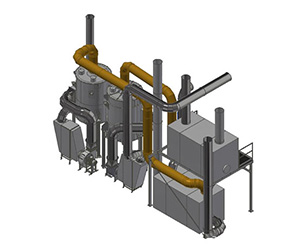
Clean and utilize heat
With the production expansion on several strand extruders, the larger exhaust air flow rate should not only be cleaned but also energetically utilized. The KMA solution, consisting of two particle filters, a carbon filter, and hall ventilation with cross-flow heat exchangers, cleans 18,000 m³/h to 95% and recovers around 160 kW of heat for the hall.
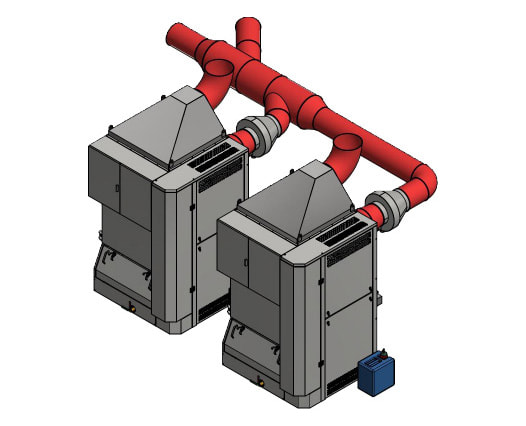
Fiber-reinforced PP/PE compounds:
Redundantly secured
For the compounding of glass fiber-reinforced types, maintenance-intensive old filters were to be replaced. Two two-stage electrostatic precipitators from KMA — each 6,000 m³/h and redundantly operable — ensure energy-efficient particle and aerosol separation of over 95% with high availability.
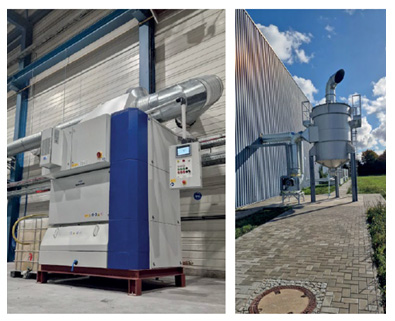
No odour emissions during
compounding at Neidhardt Rohstoff
During compounding, 10,000 m³/h of extruder exhaust air should leave the new production hall clean and free of plasticiser odours – TA-Luft compliant. The combination of a double electrostatic precipitator and activated carbon filter reliably separates particles and aerosols and binds odours, so that only clean, odour-free exhaust air is released outside.
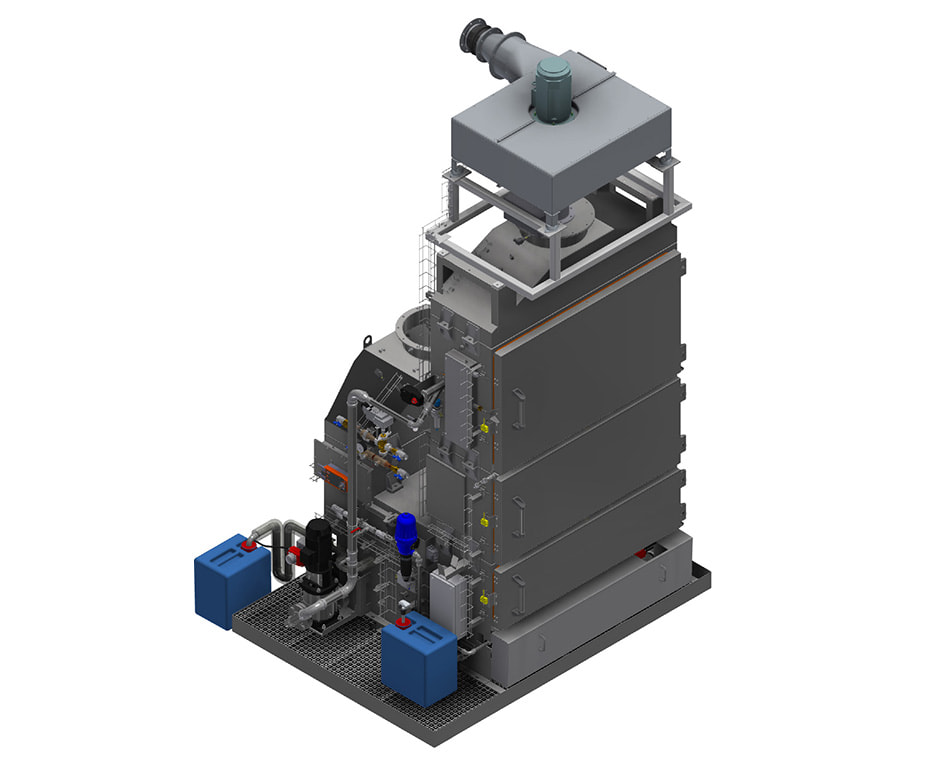
Tempering of seals at
Freudenberg Sealing Technologies
During the tempering of seals, the frequent, elaborate maintenance of the outdated electrostatic precipitators became a hindrance. A modern KMA system with automatic CIP cleaning – comparable to an integrated "dishwasher" – keeps the filter technology clean automatically and ensures constant performance with minimal maintenance effort.
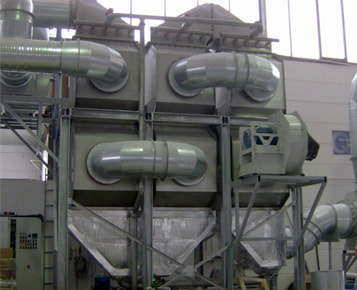
Process heat recovery
on tempering ovens
Previously, valuable process heat was lost from the tempering ovens in silicone production. A KMA tube bundle heat exchanger with alkaline self-cleaning reliably recovers this heat — with consistently high performance without manual cleaning.
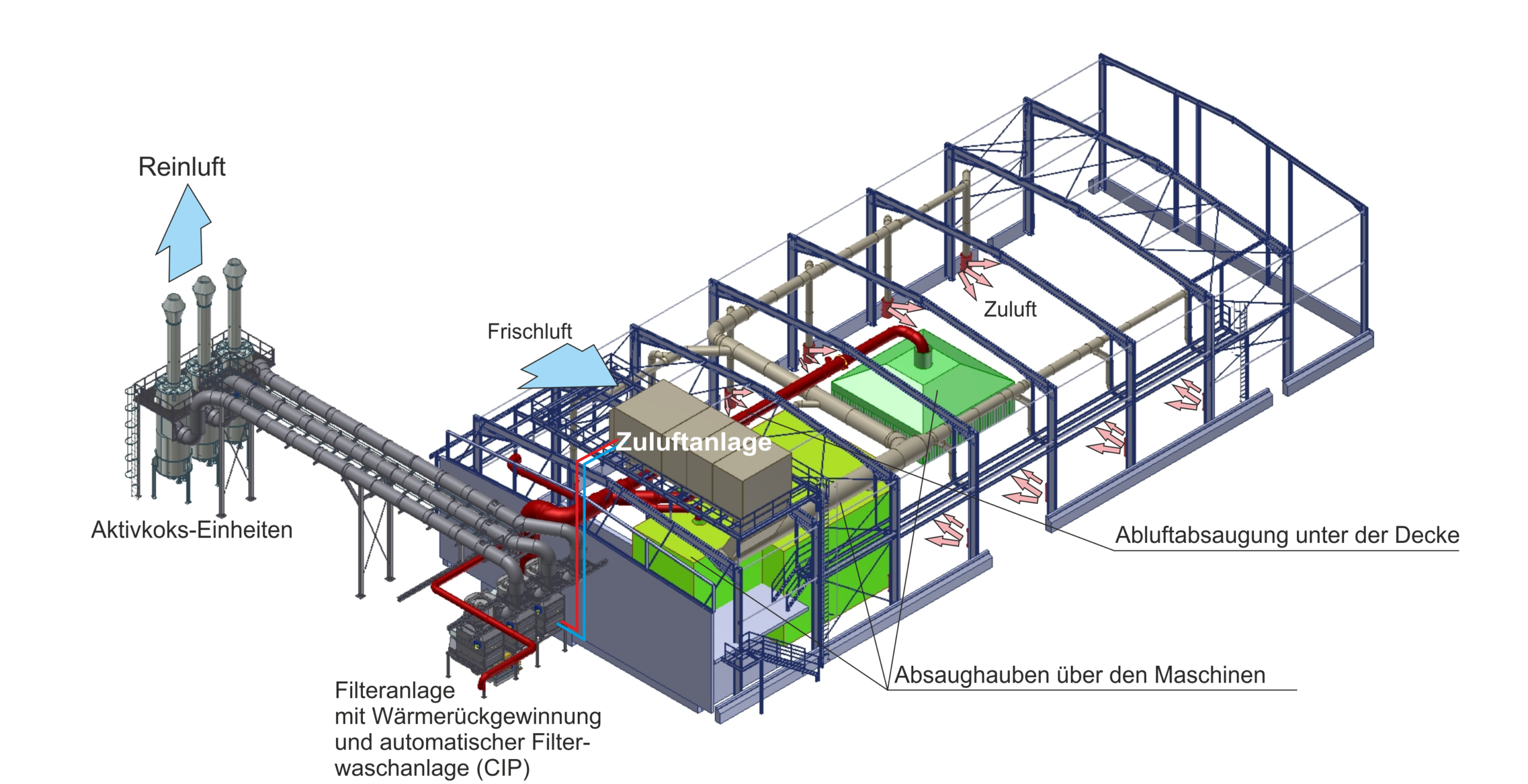
KRAIBURG ELASTIK:
Modern Supply Air and Exhaust Air Filter System with Heat Recovery
Strong-smelling process exhaust air from rubber processing – and at the same time the pressure to save energy: For the new hall construction at the renowned rubber plant Kraiburg Elastik, KMA has integrated exhaust air filtration and supply air into a single, heat-coupled system. The result: clean pure air quality, around 200 t less CO₂ per year, and a production hall that heats itself in winter solely from the recovered process heat.
Exhaust Air
KMA exhaust air filter system with integrated heat exchanger, electrostatic precipitator, and activated carbon filter – cleans 60,000 m³ of production exhaust air per hour, completely without combustion.
✓ Reliable separation of smoke, oil, and plasticiser fumes, as well as odours – pure air quality below 10 mg/m³
✓ Over 90% less energy consumption and CO₂ than thermal oxidation (RTO)
✓ Consistently high efficiency through automatic filter cleaning (CIP)
Supply Air
The supply air system is coupled directly to the heat recovery of the exhaust air system. The recovered process heat warms the fresh air before it enters the production hall – so the hall needs no separate heating in winter.
✓ Utilization of process heat for hall heating – constant 17 °C in winter without separate hall heating
✓ Energy-saving supply air distribution within the hall via layer ventilation
✓ Around €90,000 lower heating costs per year due to the elimination of gas heating
Frequent Questions about Exhaust Air Filtration in Plastics Processing
For which processes in plastics and rubber processing are KMA solutions available?
KMA provides exhaust air filtration with heat recovery for all common processes in plastics, rubber, and silicone processing: extrusion, injection moulding, vulcanisation, compounding, masterbatch and film production, vacuum degassing, tempering ovens, and recycling processes. The design is not determined by the name of the process, but by the exhaust air itself — the type and concentration of aerosols, odours, moisture, and temperature. This results in a unique combination of electrostatic precipitator, heat recovery, and odour reduction for each process. For an initial assessment, an overview of your processes and the associated exhaust air data is sufficient.
We process soft PVC, silicone, rubber, or recyclate — does that change anything about the design?
Yes, the processed material largely determines what ends up in the exhaust air. Soft PVC releases plasticiser fumes, rubber and silicone generate typical vulcanisation odours, and recyclates lead to fluctuating, difficult-to-predict emissions. The electrostatic precipitator separates smoke, oil, and aerosol particles in all cases; whether additional UV light, a catalytic carbon stage, or a condensation stage is necessary depends on the material and the required pure air quality. At Neidhardt Rohstoff, the KMA system complies with TA-Luft limit values without plasticiser odours escaping.
Can several extruders, presses, or machines be connected to a common system?
Yes, central solutions for multiple machines are possible and implemented in practice. The design is not based on the sum of all connected loads, but on the actual simultaneity requirement — i.e., how many machines actually emit at the same time. At Kraiburg Elastik, a central KMA system cleans 60,000 m³ of production exhaust air per hour and simultaneously supplies the hall’s supply air with the recovered heat; in compounding on several strand extruders, one system cleans 18,000 m³/h and recovers around 160 kW of heat for the hall. Whether a central or decentralized solution is more sensible is decided by the hall layout, pipe routes, and planned expansions.
How can particles, odours, and VOCs be safely separated without combustion?
By having each stage perform its own task, instead of destroying everything thermally. The ULTRAVENT® M combines up to five modules for this: a heat exchanger cools the exhaust air, whereby some of the volatile organic compounds condense; an electrostatic precipitator separates smoke, oil, and aerosol particles; UV light oxidatively breaks down odorous substances; a catalytic carbon stage adsorbs the remaining gases and VOCs; an automatic CIP system keeps the stages clean. The necessary combination results from the type of odour, raw gas load, and target value at the site. At Neidhardt Rohstoff, the combination of a double electrostatic precipitator and activated carbon filter is sufficient for 10,000 m³/h of extruder exhaust air to comply with TA-Luft limit values and keep plasticiser odours out of the production hall.
Plastic deposits on our roof, pipes, and fan. Will this stop?
Yes, provided the aerosols are separated before they can settle. Deposits occur because plastic particles and aerosols escape with the exhaust air and condense there. An electrostatic precipitator keeps them in the system: In the extrusion of packaging films made of PP and PE, a two-stage electrostatic precipitator per film line filters over 95% of particles and aerosols — roof, pipes, and fan remain permanently clean. This also reduces the cleaning effort on the building and surrounding systems.
How complex is maintenance — do I have to change filter media or remove components?
No, a change of conventional filter media is not necessary. Heat exchangers, electrostatic precipitators, and UV modules are automatically cleaned by an integrated CIP cleaning system within the filter housing, at the programmed time and without removing components. Especially with sticky particles, this is the decisive difference: Treffert has ended the expensive replacement of clogged filter media by switching. In the odour stages, UV tubes and carbon cartridges are used, which are renewed periodically.
Can the system be expanded later if a line is added?
Yes. KMA filter systems have a modular design: additional cleaning stages such as UV light or a catalytic carbon stage can be retrofitted, as can heat exchangers or additional filter units. It is advisable to specify planned expansions already during the initial design — then reserves for volume flow rate, installation area, and pipe routing are taken into account from the outset, and the later expansion remains a manageable step.
May I return the cleaned air to the production hall?
Basically yes, under the conditions of VDI 2262 Part 3 for returning cleaned air to the workplace. Recirculation air mode is energetically attractive because the hall heat remains in the building; it is crucial that the cleaned air reliably complies with the workplace limit values according to TRGS 900 — ensured by separation efficiency, monitoring, and, if necessary, an additional filter stage. Whether recirculation air or exhaust air mode is more sensible is decided by the hall climate, heat demand, and the requirements of your risk assessment. We will calculate both options for you.
Your direct contact
Talk to Viktor Schön
Whether it’s extrusion, compounding, film production or vulcanisation: in plastics processing, every exhaust air stream is different.
Do you need to comply with limit values, reduce odours or cut energy costs? If so, let’s work together to find the solution that best suits your process.
Our Solutions in the Trade Press
Publications & Articles
More Information
Downloads & Links
Laws & guidelines
TA-Luft: Clean Air Maintenance – Emission Limit
VDI 2262-3: Air Quality at the Workplace – Clean Air Recirculation
TRGS 900: Occupational Exposure Limits