Exhaust air filtration
and
heat recovery
for the foundry
Clean air, smart use of process waste heat and noticeably improved energy efficiency in the foundry — thanks to foundry-proven exhaust air technology and holistic production hall ventilation systems.
The green competitive advantage for your foundry
We are your foundry experts for emissions, waste heat and energy.
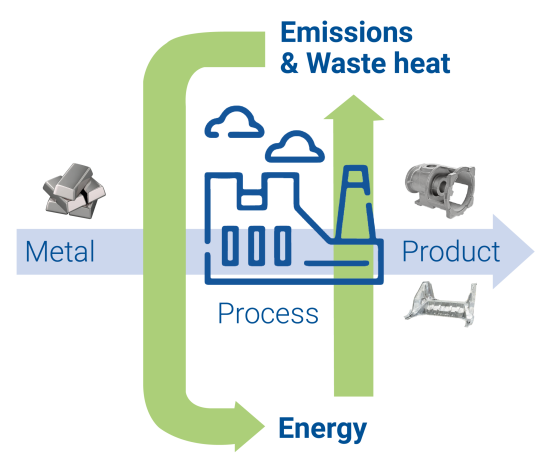
Every foundry is a continuous process. Metal becomes product. Energy becomes emissions and waste heat. That is exactly where your savings potential lies.
KMA sees the foundry as a whole: we combine exhaust air filtration, heat recovery, supply air and production hall heating into one system instead of individual components.
Systems that reliably eliminate emissions while running efficiently. The focus is on your foundry’s waste heat as an energy source. Instead of venting it unused, we recover the energy and send it where it is needed — to hall heating, the paint shop and more.
✓ Increase energy efficiency
✓ Meet emission requirements
✓ Improve ESG rating
We put our trust in KMA








Solutions for the energy-efficient foundry
Where in the foundry can we support you?

From "nice to have" to a relevant decision criterion
Which foundry would you choose?
Foundry of yesterday: dark, dusty, dangerous
Foundry of today: bright, clean, energy-efficient
Increased
wear
on machinery
Contamination of equipment
and production halls
Risk
of regulatory penalties
Risk to
workplace safety
Certification
for end customers
Value retention
for investments
Quality management
requirements
Securing
skilled workers
Good evironmental technology is not created in-house alone. We have a research partnership with the Center for Lightweight Casting and Design (GTK) at the University of Kassel on the energy-efficient capture of emissions at die casting machines. In a joint project funded by the German Federal Environmental Foundation, we are investigating air curtain systems as an alternative to ever larger Extraction hoods — for machines from 400 t to over 5,000 t clamping force, as used in megacasting.
KMA contributes experience from plant engineering, while GTK provides the scientific analysis and its own machinery for practical testing. In addition, we participate in the industry’s expert committees, including the Federal Association of the German Foundry Industry, and share our results at specialist events such as the Global Giga Casting Congress in Kassel.
Cooperations with foundry chairs and associations
Research & development
CUSTOMER EXAMPLE energy-efficient foundry
Benefit like the STIHL magnesium die casting plant
“Our system is proof that sustainable production becomes concretely measurable: less CO₂, highly efficient use of existing process heat, and independence from fossil fuels in production hall heating.”
Hartmut Fischer, Managing Director, ANDREAS STIHL AG & Co. KG
Magnesium Die Casting Plant
The trade publication GIESSEREI published the project in Weinsheim as “Best Practice: High-performance heat recovery”. Download the complete case study now and find out why this efficiency project is receiving special attention in the industry.
Holistic air management
Best practice at STIHL
Download
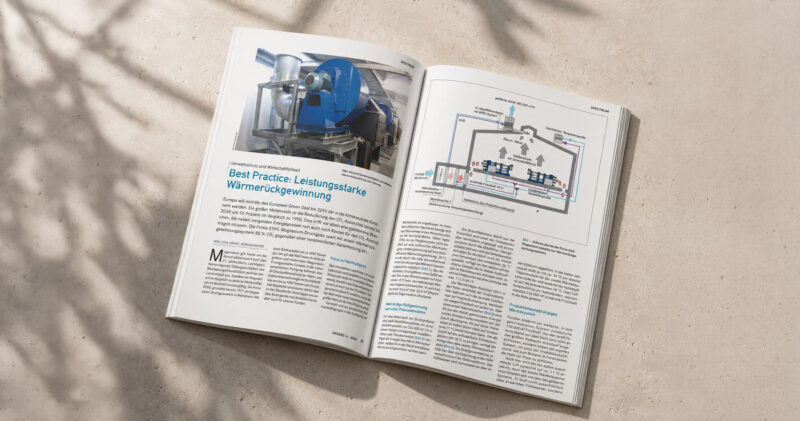
Improved energy efficiency for foundries
70% of your energy costs are in process heat. We recover it.
Integrated solutions for the foundry combine exhaust air cleaning, heat recovery, supply air and energy reuse in one coordinated system. Exhaust air is not just cleaned and released. The process heat it carries is put to use. This makes your plant more energy efficient.
At home in foundries all over the world.
You are currently viewing a placeholder content from YouTube. To access the actual content, click the button below. Please note that doing so will share data with third-party providers.
More InformationWe are the specialists for foundry-proven solutions around exhaust air filtration and heat recovery.
Frequently asked questions about exhaust air filtration in the foundry
Why should a foundry consider exhaust air filtration and heat recovery together?
Process exhaust air contains both emissions and usable heat. If both are considered together, the exhaust air is cleaned and its energy is fed back into operations instead of escaping unused through the roof. This can also be implemented retrospectively in existing foundries: heat recovery is integrated into existing extraction and supply air systems. For new systems, it is planned in from the start. KMA brings exhaust air filtration, heat recovery, supply air and energy utilisation together in a coordinated overall system.
Why should a foundry recover heat if it already has too much of it?
Because it’s not about heat, it’s about energy recovery, energy recuperation: every kilowatt-hour you recover is one you don’t have to buy. You have already paid in full for the energy in your exhaust air via gas or electricity — unused, it leaves the plant through the roof. Once recovered, it replaces purchased energy and immediately reduces energy costs, operating costs and CO₂ emissions. How quickly the investment pays for itself is determined by three factors: the energy source being replaced, the operating hours and the CO₂ price.
What can the recovered energy from the process exhaust air be used for?
For virtually all heat sinks at the site: production hall heating, supply air heating, service water, burner air preheating at the melting furnace, or adjacent processes such as the paint shop. In principle, feeding into a district heating network, absorption cooling or power generation via an ORC system are also possible. Which sink is the right one is determined by two factors: the temperature level of the exhaust air and the time overlap between heat supply and heat demand. From our foundry projects, we know the typical sinks and their special features — so we advise you not only on the recovery itself, but on the most sensible utilisation in operations.
What requirements does my foundry need to meet for exhaust air filtration with heat recovery?
No special requirements. Every foundry is different, which is why we design every system to suit the on-site conditions. Key factors are the number and size of the die casting machines, the production hall geometry, the existing ventilation technology, the available installation space on the roof or floor, and the heat sinks in operations. Existing supply air systems are integrated and not replaced, as in the STIHL magnesium die casting plant, where the existing layer ventilation was fully incorporated into the new solution. What’s possible at your site, we clarify on location based on your real production hall and process situation.
How can I improve air quality in my foundry?
The most effective approach is smoke extraction directly at the die casting machine. What escapes into the production hall spreads throughout the entire volume and requires a higher air exchange rate — with corresponding energy input and risk for occupational safety requirements for production hall ventilation. Alternatively or additionally, central capture in the production hall roof is possible, as implemented at STIHL. We know the foundry-specific solutions for air pollution control (APC) and design them to match your machine layout and production hall situation.
When do you recommend a central exhaust air filter system and when a decentralised one?
Decentralised — one filter per machine — is recommended for distributed emission sources and growing production, because long exhaust air ducting is eliminated and the system grows with each new machine. Central — multiple machines on one filter station — scores with a lower investment per cubic metre of volume flow rate in dense machine layouts, but requires more complex piping. The deciding factors are the production hall layout, number of machines, expansion plans and the heat utilisation concept. Based on your production hall layout, we will propose the right configuration for you.

Your direct contact
Talk to Kerem Kartal
Would you like to know how exhaust air filtration, heat recovery, supply air management and production hall heating can be sensibly combined in your foundry?
Then let’s work together to find the system concept that fits your site technically and energetically. The basis is always your real hall and process situation.
Our solutions in the trade press
Publications & technical articles
We are the expert
Further applications
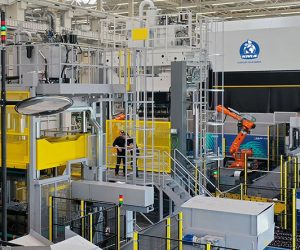
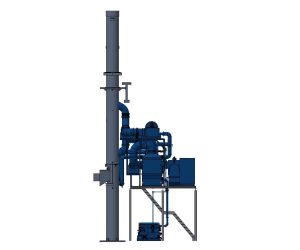
clean air.
saVe energy.
>3,000
Systems installed worldwide
80 %
Energy savings possible compared to conventional exhaust air technology
360°
Emissions, exhaust air and energy. Engineered together.
1,500+
Customers worldwide trust our technology
More information
Downloads & links
Laws & guidelines
TA-Luft: Air pollution control – emission limit
VDI 2262-3: Workplace air quality – pure-air recirculation
TRGS 900: Workplace limit values