




Sustainable Exhaust Air Filtration for Meat Alternatives

How endori produces pea-based meat and fish alternatives at its Stegaurach site – with clean exhaust air, low energy consumption, and entirely without burning fossil fuels.
A multi-stage KMA filter system with heat recovery makes it possible.

Potential in the production of meat alternatives -
Sustainable from Field to Fork

endori produces popular pea-based meat and fish alternatives in Stegaurach. Manufacturers of meat alternatives can gain customer loyalty by sustainably managing production-side emissions into
the environment.

In line with its green value chain, a KMA filter system sustainably cleans cooking line and industrial fryer exhaust air in compliance with TA-Luft, recovers heat, and operates entirely without combustion.

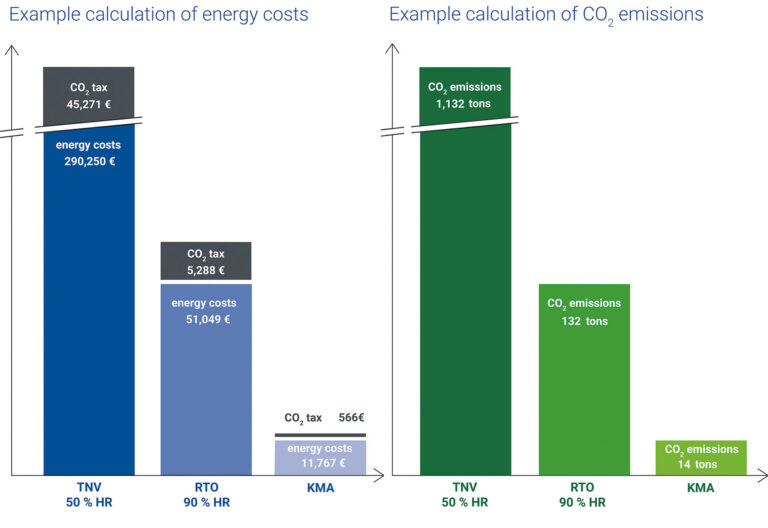
14 t instead of 1,132 t CO₂
every year

approx. 99% less CO2 emissions than a conventional oxidiser

€12,000 instead of over €290,000 in operating costs

Reduced energy consumption and TCO – Per year, including CO₂ tax.

0 m³ natural gas


Completely without combustion: no natural gas, no direct CO₂ emissions.

Icon-Lightbulb-V1
~100-watt light bulb


This is how much electricity a KMA filter cell needs for 5,000 m³/h exhaust air.

At its Upper Franconian site in Stegaurach, endori produces pea-based meat and fish alternatives – schnitzel, burger patties, nuggets, vegan chicken. The frying and cooking process generates hot, oily process exhaust air (60–70 °C) containing odors and volatile organic compounds (VOC).
Already during the plant’s founding in 2015, endori faced the classic decision: thermal oxidation of exhaust air – energy-intensive, with high CO₂ emissions, and in contradiction to its own “from field to fork” value chain. Or an alternative path that aligns with its green brand identity.

Production of "sustainable" schnitzel

The Initial Situation at endori

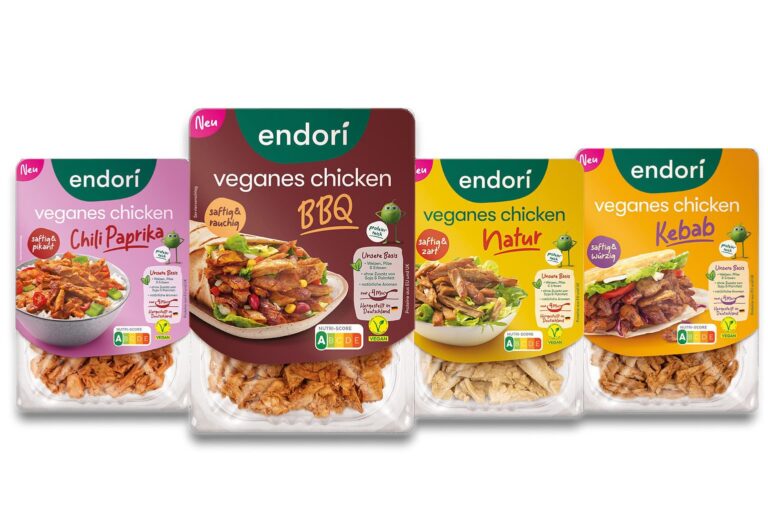
From the pea field directly into production: The new vegan chicken range.

Three Key Requirements for endori Production

Comply with TA-Luft & GIRL


Cooking line and industrial fryer exhaust air contains odors and VOCs. The TA-Luft, including the Odor Emission Guideline (GIRL), allows a maximum of 10% of annual odor hours in residential areas – often 500 odor units per m³ of exhaust air in practice.

Avoid the Energy Intensity of oxidiser

A conventional thermal oxidation operates at over 750 °C. For 7,500 m³/h exhaust air and 5,000 operating hours, it burns approximately 562,500 m³ of natural gas per year – with corresponding energy costs.
Reduce CO₂ Footprint


If a plant burns natural gas, it directly emits CO₂ and drives up operating costs further due to the EU CO₂ tax (€40/t in 2024, €55/t in 2025). This does not align with endori's "field-to-fork" strategy.
The Potential for a Consistently Green Value Chain

Sustainable from Field to Fork

In industrial cooking and frying applications, odor emissions are released in hot, oily process exhaust air. This applies to large-scale frying and cooking processes in industrial food production, similar to frying or cooking in a home kitchen.

endori sought an alternative to thermal oxidation that aligns with the company’s consistently green value chain. Because even pea schnitzel, vegan chicken, vegan nuggets, or vegan burgers pass through the industrial fryer or cooking line.

Four requirements were specified for the exhaust air filtration of the industrial fryers:

  • Effective separation of particles, aerosols, odors, and volatile organic compounds – compliant with TA-Luft and GIRL
  • Heat recovery to use the hot cooking line and industrial fryer exhaust air as an energy source
  • Cleaning process without burning fossil fuels – i.e., without direct CO₂ emissions
  • High maintenance convenience and process reliability in continuous operation

“We respond to the clear expectations of our current customers by producing what they demand. This also includes a consistently green value chain – including exhaust air filtration.”

Roland Stroese, Chairman of the Management Board, Nature’s Richness Group (endori parent company)

Enormous Cost and CO₂ Reduction

The Successes of Environmental Technology at endori

Low-maintenance in continuous operation

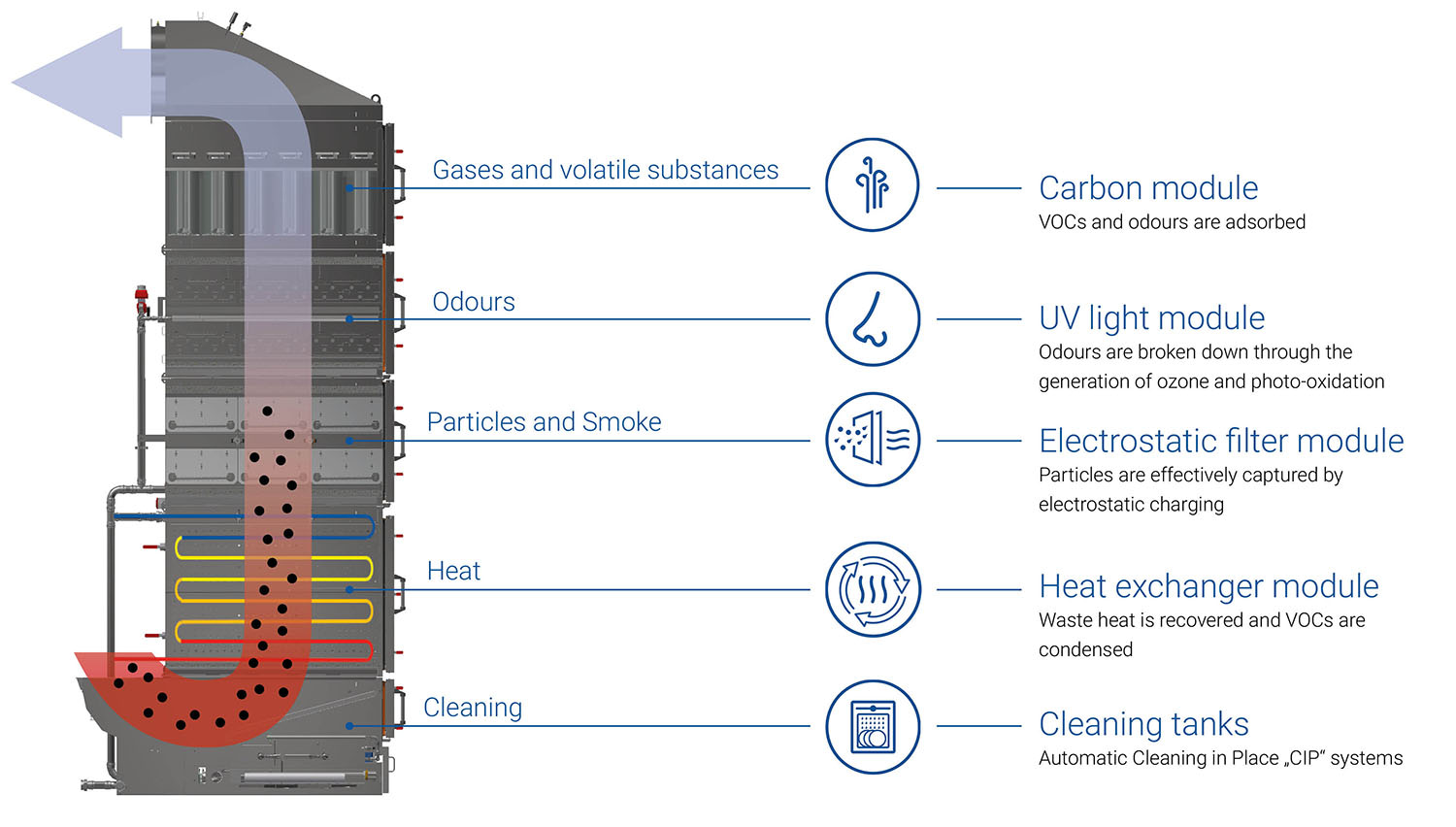
The CIP system cleans the heat exchanger, electrostatic precipitator and UV light tubes fully automatically using moving nozzle bars. No filter media changes, no dismantling—the cleaning fluid circulates resource-efficiently between the cleaning tank and filter system.

Not 1,132 t but 14 t of CO₂ emissions per year

The system burns no fossil fuels and operates entirely electrically – the energy consumption of a filter cell for 5,000 m³/h exhaust air is approximately equivalent to a 100-watt light bulb.

Instead of €290,000, only €12,000 in operating costs per year

Modern environmental technology is extremely economical in operation and burns no fossil fuels.

The production exhaust air is cleaned in compliance with TA-Luft and GIRL, and the heat flows back into supply air and service water—at a fraction of the operating costs and CO₂ emissions of thermal oxidation.

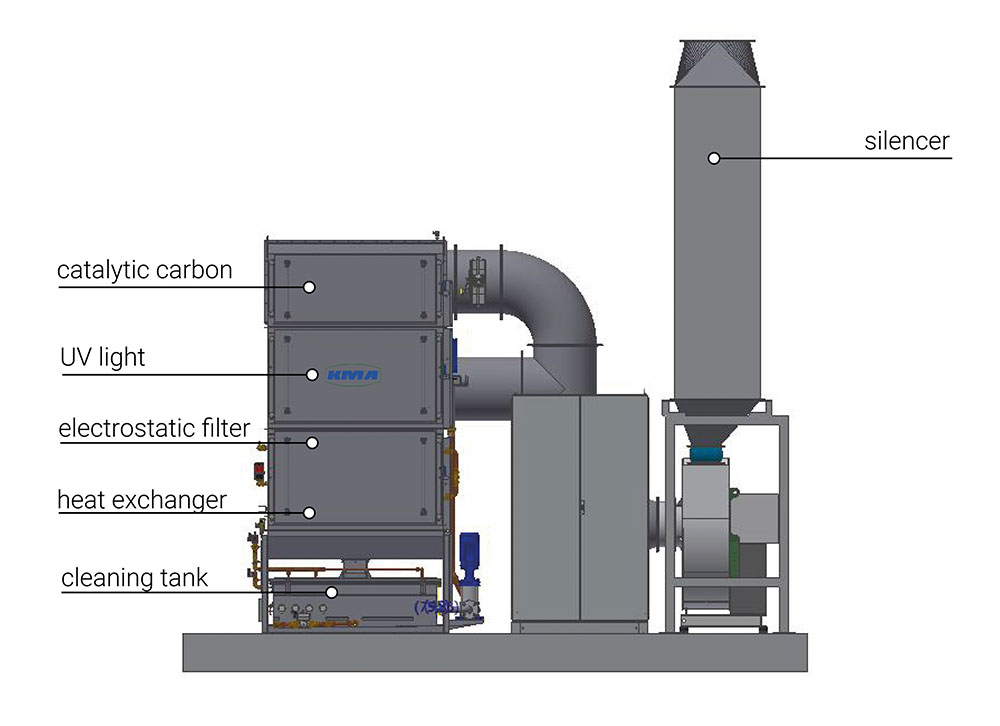
To clean the industrial fryer and contact cooking line exhaust air, KMA installed a roof-mounted ULTRAVENT® filter system directly above the emission sources. A manifold pipe collects the hot, odor-laden exhaust air from the industrial fryer and cooking line – the filter system combines four coordinated process stages in one compact module.
The result: TA-Luft and GIRL-compliant cleaning of process exhaust air, simultaneous heat recovery for supply air and service water – at a fraction of the operating costs and CO₂ emissions of thermal oxidation.

How we successfully supported endori

The Specialist Publication: "Sustainable" Schnitzel

How the ULTRAVENT® M Filter System Cleans Exhaust Air

Our Solution for endori's Process Exhaust Air

Automatic maintenance without removal.

An integrated cleaning system (CIP) automatically flushes heat exchangers, filters, and UV tubes – like a built-in dishwasher. No filter replacement, no removal, no downtime.

Eliminate odors.

UV light and a carbon filter break down the odors and volatile organic compounds (VOC) generated during cooking and frying. This keeps the air odor-free even outside the plant.

Filter out grease and particles.

Two electrostatic precipitators electrically charge particles and aerosols and remove them from the air. This retains fats and oils before they can travel further.

Recover heat instead of wasting it.

A double heat exchanger cools down the hot exhaust air and reuses the heat – for supply air and service water up to 60 °C. The waste heat thus works for the site instead of being lost.

To clean the industrial fryer and contact cooking line exhaust air, KMA installed an ULTRAVENT®M filter system on the roof, directly above the emission sources. A manifold pipe collects the hot, odor-laden exhaust air from the industrial fryer and cooking line. Four coordinated stages clean it in one compact module.

UV-M-individual-modules-V6-web
The functional modules of the universal filter system: combinable as needed for exhaust air filtration and heat recovery in various industries and processes

clean air.
save energy.

>3,000

Systems installed worldwide

80 %

Energy savings possible compared to conventional exhaust air technology

360°

Emissions, exhaust air and energy. Engineered together.

1,500 +

Customers worldwide trust our technology

DO YOU HAVE QUESTIONS?

Frequently Asked Questions about Exhaust Air Filtration for Meat Alternatives

Yes — hot, oily cooking line and industrial fryer exhaust air is generated in every industrial frying and cooking line, regardless of the product. This is precisely where the endori system recovers its heat, and where the cleaning process begins. Therefore, the recipe or raw material is not decisive for transferability, but rather the exhaust air flow rate, temperature, grease and odor load, and where heat is needed at the site. At endori, this is approximately 7,500 m³/h of exhaust air at 60 to 70 °C. We will assess the potential of your process exhaust air based on your real operating data.

The process is product-independent. Whether pea protein, meat, fish, potato, or convenience products: frying and cooking generate the same types of emissions — grease aerosols, particles, odors, and volatile organic compounds (VOC). Differences exist in quantity and composition, and the combination of cleaning stages is designed precisely for these. The setup that works at endori is therefore also the right reference for conventional meat, snack, and convenience productions.

The effect is immediate: Because no fossil fuels are burned, direct CO₂ emissions from exhaust air filtration are almost completely eliminated. At endori, it’s 14 instead of 1,132 tons per year — about 99% less than with a conventional thermal oxidation. These emissions count towards the site’s Scope 1 balance and thus directly impact sustainability reports and supplier evaluations. For endori, this was crucial: the exhaust air filtration had to align with its own “from field to fork” value chain.

Because emissions are separated, not burned. Four coordinated stages each perform a task: a double heat exchanger cools down the hot exhaust air and returns the heat to the operation, two electrostatic precipitators electrically charge grease aerosols and particles and remove them from the air, UV light and a carbon filter break down odors and VOCs. A flame is not necessary for this: the endori plant consumes 0 m³ of natural gas, and a filter cell for 5,000 m³/h exhaust air requires about as much electricity as a 100-watt light bulb.

Yes — at endori, a manifold pipe collects the hot, odor-laden exhaust air from the industrial fryer and cooking line; it is then cleaned in a compact module. The design considers the simultaneity of processes rather than the sum of individual connections. This reduces investment and space requirements compared to separate systems, while also keeping the number of maintenance points small.

Yes. The exhaust air technology is connected to the existing process without changing the production process itself; extraction, filter stages, and heat recovery are designed for the existing system and spatial conditions. The advantage of an early decision, as with endori, is that installation areas, pipe routes, and heat sinks are planned from the outset. In existing facilities, the existing exhaust air routing and available space primarily determine the complexity of retrofitting.

profile-pic (19)

Jörg Lampe

Sales Manager
+49 2244 9248 42

Your direct contact

Talk to Jörg Lampe

Would you like to know how exhaust air purification and heat recovery can be combined in the food processing sector — and how quickly it pays for itself?

Then let’s assess your potential savings together. The basis is always your real process and production hall situation: exhaust air volume, temperature, operating hours and available heat sinks.

Our solutions in the trade press

Publications & technical articles

More information

Downloads & links

Laws & guidelines

EU BREF Directive

TA-Luft: Air pollution control – emission limit

VDI 2262-3: Workplace air quality – pure-air recirculation

TRGS 900: Workplace limit values