
KMA ULTRAVENT® M
Our modular filter system

The modular system for industrial process exhaust air: electrostatic precipitator, heat exchanger, UV light, wet scrubber and activated carbon freely combinable, with CIP cleaning and up to 90% less energy than thermal oxidation.

The modular exhaust air filter system with flexible process modules

The modular ULTRAVENT® M is a compact and flexible solution for filtering your industrial exhaust air and integrated heat recovery of process heat. A compact system tailored to your process instead of off-the-shelf.

Reduced energy costs and the use of heat recovery ensure low operating costs. The integrated cleaning system enables high maintenance convenience — efficient and sustainable.

Light bulb icon with four puzzle pieces. One piece is positioned with some distance.

Flexibly
configurable

Icon filter with two rectangles through which droplets flow from left to right and emerge on the right as clean air in the form of waves.

High-performance
components

Icon of stacked coins with a branch growing on top

Low
Operating costs

Integrated
cleaning
HOW IT WORKS

Our solution portfolio. Configurable according to requirements.

Depending on the industry and production process, the specific requirements for the exhaust air filtration process vary. Our modular process units can be combined in a variety of ways and configured to suit individual requirements. Depending on the requirements, the ULTRAVENT® M enables the removal of particles, odours and VOCs, as well as the recovery of heat from the exhaust air.

The functional modules of the universal filter system: combinable as needed for exhaust air filtration and heat recovery in various industries and processes

ULTRAVENT® M. M for modular.

Flexible configuration

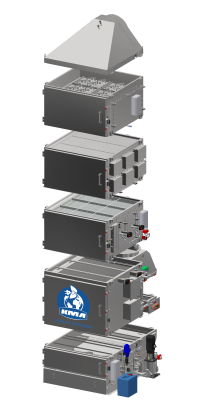
The selection of modular process stages determines the height of the ULTRAVENT® M. Thanks to its compact design, the ULTRAVENT® M measures a universal width of 2,000 mm.

Flexibly choose the process modules and equipment options that best suit your specific application and exhaust air requirements and benefit from the wide range of solutions offered by the high-performance ULTRAVENT® M filter system.

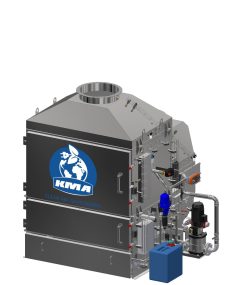
The illustrations show the ULTRAVENT® M for an exhaust air volume of 10,000 m³/h in various equipment variants.

UV-M-10000-eco-logo
Equipment example
ULTRAVENT M
with electrostatic precipitator only
UV-M-all-modules-total-eco-logo
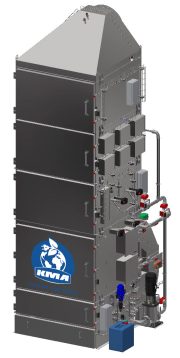
Equipment example
ULTRAVENT M
with many modules
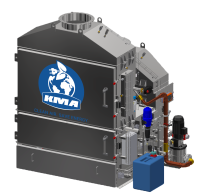
UV-M-modules-individual-eco-logo
Equipment example
ULTRAVENT M
with many modules
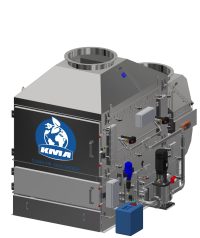
UV-M-5000-eco-logo
ULTRAVENT M 5000
UV-M-20000-eco-logo
ULTRAVENT M 20000

from 5,000 to 20,000 m³/h

Sizes & variants

Design variants

The filter housing can be painted or made of pickled stainless steel.
The filter cells and heat exchangers can be installed in either aluminum or stainless steel version.

Exhaust air filter capacity
The full range of process stages is offered in modules from 5,000 to 20,000 m³/h. The combination of several filter systems offers solutions for higher exhaust air flow rates. The depth of the filter system depends on the exhaust air filter capacity.

Technical modules

High-performance functional modules

Flexibly choose the process modules and equipment options that best suit your specific application and exhaust air requirements and benefit from the wide range of solutions offered by the high-performance ULTRAVENT® M filter system.

Targeted process heat recovery

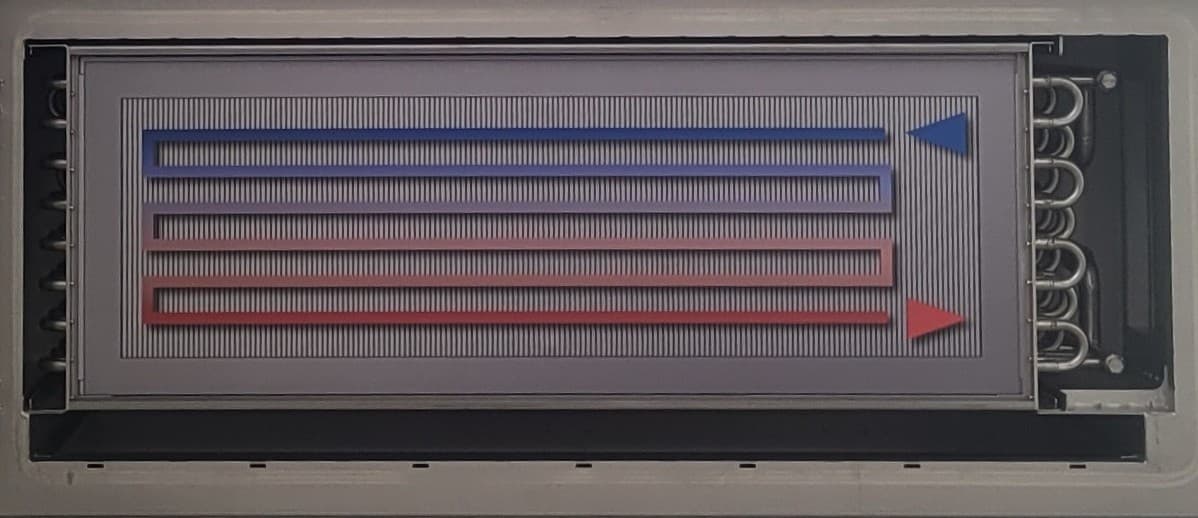
Heat exchanger module

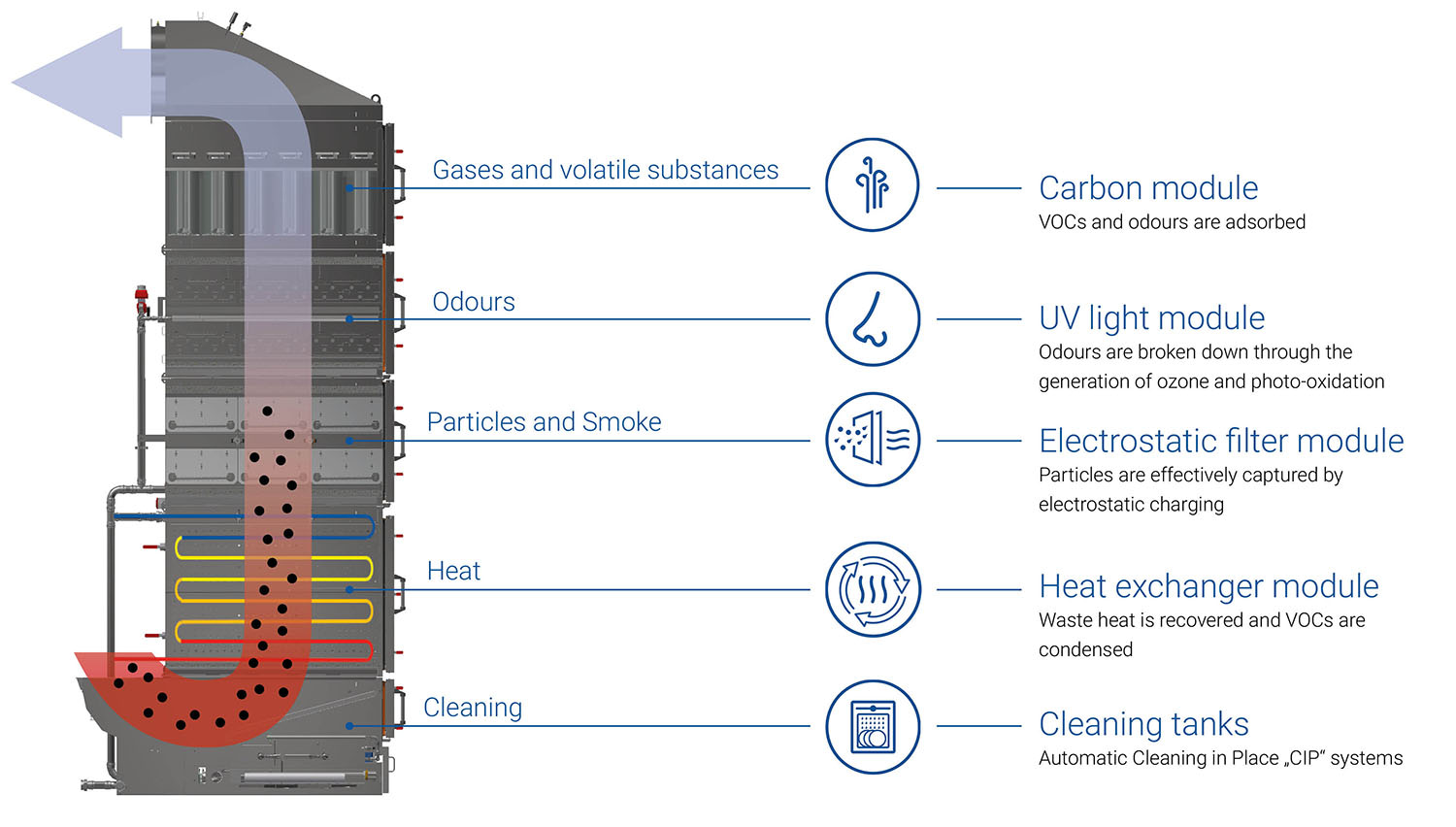
The heat exchanger of the ULTRAVENT® M uses the thermal energy contained in the exhaust air and makes it available to the process again in a targeted manner. This reduces the need for conventional heating energy and noticeably lowers total energy consumption.

Particularly in energy-intensive processes with high exhaust air temperatures, heat recovery can optimise the energy efficiency of your production facilities. At lower temperature levels, the targeted use of high-efficiency heat pumpsincreases the effectiveness of heat recovery through optimised heat transfer and higher efficiency.

How You Can Use the Recovered Heat

Air-to-air heat recovery

Air-to-water heat recovery

Energy return for supply air heating

The ULTRAVENT® M enables the integration of high-performance air-to-air heat exchangers for the effective recovery of process energy from the exhaust air to heat the fresh air. The heat exchanger has an integrated bypass with a multi-leaf damper for the fresh air, so that fresh air supply without heat recovery is also possible.
Generation of hot water for other processes

The ULTRAVENT® M enables the integration of high-performance heat exchangers for the effective recovery of process energy from the exhaust air as well as for cooling and condensation during exhaust air filtration. Depending on the application, the heat exchangers can be operated with water or glycol.

Highly efficient particle separation

Electrostatic precipitator module

Industrial processing creates dust, smoke, sticky and greasy emissions as well as the finest oil mist. Many of these emissions are harmful to the environment and hazardous to health.

The electrostatic precipitator of the ULTRAVENT® M cleans industrial exhaust air with high efficiency. Separation is carried out electrostatically with low energy consumption. The charged particles are directed to the
collector plates due to electrostatic forces.

Liquid components drip off and collect in a floor tray. Sticky and viscous substances initially remain on the plates until they are effectively removed by the integrated automatic cleaning system.

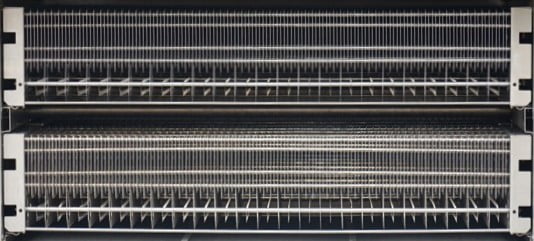
Close-up of electrostatic precipitator with view of the collector plates

How electrostatic charging works

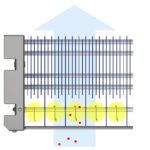
Cross-section of an electrostatic plate precipitator where particles (red dots) flow through an electric field (yellow areas)

Ionisation

The high voltage at the ionisation profiles creates an electric field. The passing particles are charged here.
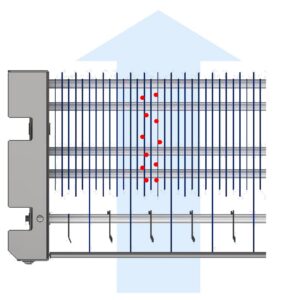
Cross-section of an electrostatic plate precipitator where charged particles (red dots) flow through the filter and adhere to the collectors

Separation

Earthed separator plates attract the passing particles and hold them back with minimal air resistance.
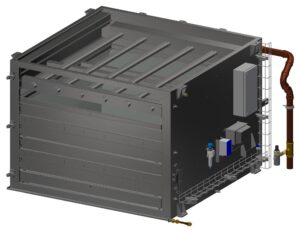
Cleaning system

Automatic integrated cleaning

Many of our customers already have experience cleaning electrostatic precipitator cells and heat exchangers. This work is dirty, laborious and time-consuming.

With automatic cleaning in place (Cleaning in Place “CIP”)

Similar to a household dishwasher, the integrated cleaning system offers various programs to choose from. The filter cells, the heat exchanger and the UV light are cleaned automatically within the filter system, thereby minimising unwanted downtime in the production line. Developed over many years, the cleaning system delivers unique effectiveness while maintaining resource efficiency.

You are currently viewing a placeholder content from YouTube. To access the actual content, click the button below. Please note that doing so will share data with third-party providers.

More Information

Modules for the removal of odours and VOC

Wet scrubber, UV light and catalytic carbon

The integrated wet scrubber module is a compact solution for moist exhaust air with a low particle load and handles exhaust air condensation as well as the separation of odours and VOC in one system.
Wet scrubber module

The wet scrubber module is a compact solution for moist exhaust air with a low particle load and combines exhaust air condensation, odour and VOC separation in one system. The module can be combined with the UV light module.
A plate heat exchanger optionally extracts the bound latent heat from the moist, saturated exhaust air – similar to a vapour condenser – and is suitable for raw gas temperatures up to 110° C. The recovered heat can be used directly via various transfer media such as water, brine or glycol, for example for supply air heating, for a buffer tank or process distribution.

UV light module

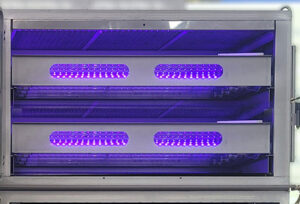
In combination with natural oxygen (O₂), UV light generates highly reactive radicals and ozone. This allows intensely smelling molecules to be oxidised and a significant improvement in the odour situation to be achieved.
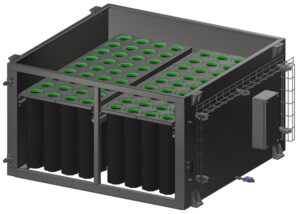
CAD graphic of the ULTRAVENT M carbon module, consisting of several carbon cartridges sitting in a holder and permanently installed in a housing.
Catalytic carbon

A carbon filter module is used in the ULTRAVENT M to separate entrained gases and volatile organic compounds (VOC). The integrated catalytic carbon filter with fine coke adsorbs VOC, gases and many odours highly effectively.

Energy efficiency

Use of environmental technology reduces operating costs

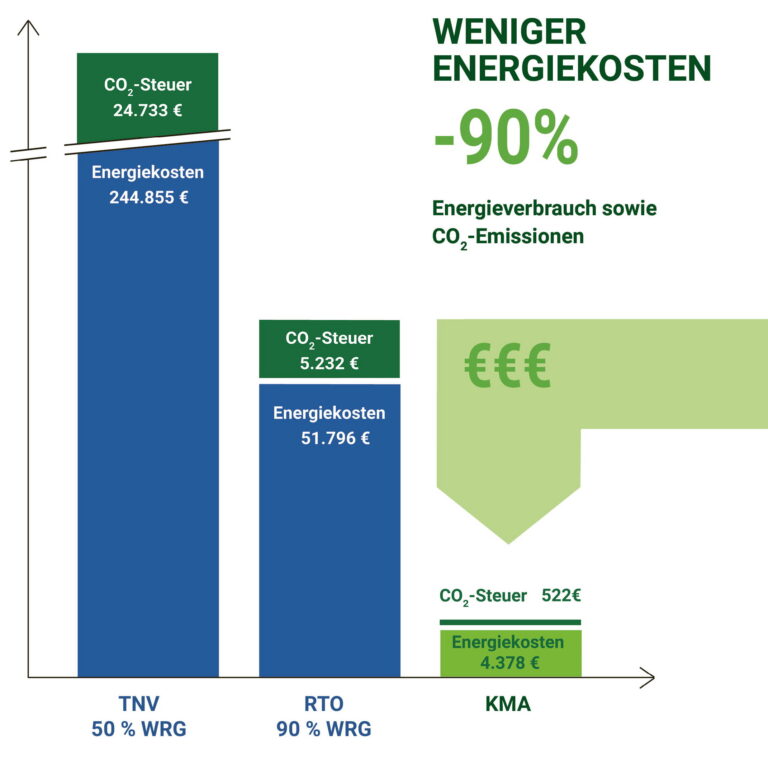
Infographic shows the comparison of thermal oxidation, an RTO and a KMA filter system and the associated saving in CO₂ tax and energy costs of 90% when using a KMA filter system
  • Exhaust air treatment without thermal oxidation: saving energy, reducing costs

    The ULTRAVENT® M removes odours and VOCs without thermal oxidation – thereby significantly reducing energy consumption and operating costs. While a thermal oxidation system often requires temperatures above 750° C to meet regulatory limits and generates fossil fuel consumption as well as emissions such as CO₂ and NOx, the ULTRAVENT® M operates without combustion, thereby improving its environmental performance and ensuring cost certainty.

  • Low energy consumption through electrostatic precipitator technology
    Compared to mechanical filter processes, the use of the ULTRAVENT® M reduces energy requirements by more than 80%. The electrostatic precipitator is optimised for low air resistance and minimal pressure drop. The integrated cleaning system reduces maintenance effort, downtime and follow-up costs due to filter replacement and ensures long-lasting filter cells and modules.

  • Heat recovery from process exhaust air: permanently reduce energy costs
    Through integrated heat recovery, the ULTRAVENT® M makes process waste heat usable, e.g. for production processes, and thus lowers energy consumption and operating costs. At the same time, this reduces CO₂ emissions and thus also CO₂-related costs in the long term.
Basis of calculation
  • Exhaust air flow rate: 5,000 m³/hour
  • Operating time: 5,760 hours/year
  • Gas price: 9 cents/kWh
  • EU-CO₂ tax: 40 €/tonne | 2024
  • Practical example: plastics processing industry

Valeo Wiper Systems is cleaning the exhaust air generated during the vulcanisation of its wiper blade profiles at the Bietigheim-Bissingen site for the first time with an electrostatic precipitator system from KMA instead of energy-intensive thermal oxidation. As a result, CO₂ emissions and operating costs are falling drastically, while a modular structure (including heat exchanger, electrostatic precipitator, UV module and activated carbon filter) reliably cleans the exhaust air and can additionally recover waste heat.

This business case proves it:

The ULTRAVENT® M saves energy and costs

FAQ — Questions about the ULTRAVENT® M

That is exactly how it is intended. The ULTRAVENT® M consists of process modules that can be freely combined; the stages that your exhaust air actually requires are configured — and no others. Those who only need to separate particles and aerosols receive a device with an electrostatic precipitator and cleaning system. If odours or volatile organic compounds are added, UV light, a catalytic carbon stage or a wet scrubber module complement the configuration. If the exhaust air contains usable heat, a heat exchanger module is added. Because all modules are located in the same system, there are no interfaces between individual systems and no costs for stages that your process does not need.

Five modules form the modular system, and their sequence is part of the concept. The heat exchanger is at the front: it cools the exhaust air, recovers the heat and condenses part of the volatile compounds in the process. This is followed by the electrostatic precipitator, which separates smoke, oil and aerosol particles; liquid components collect in a floor tray. After that, UV light and a catalytic carbon stage treat the remaining odours and VOC. For moist exhaust air with a low particle load, a wet scrubber module is also available, which can be combined with the UV module. The final part is the cleaning system, which automatically cleans all stages. Which modules your process needs depends on the raw gas and the required clean gas value.

Volume flow rate, exhaust air temperature, type and concentration of the load as well as the required clean gas value determine the module selection. Particles, smoke and aerosols require the filter stage; odours and volatile organic compounds decide whether UV light, a carbon stage or a wet scrubber is necessary; temperature and operating hours show whether heat recovery is worthwhile. You do not need to have these values fully to hand — much of it results from existing measurement reports, from the permit notice or from an inventory of the process. Our experts support you in selecting the functional modules based on an individual design.

It makes the space requirement predictable. The width is a uniform 2,000 mm for all configurations; the height results from the number of process stages selected, the depth from the exhaust air filter capacity. A device with a pure electrostatic precipitator is correspondingly compact, while a configuration with a heat exchanger, UV light and carbon stage is taller. Because all stages are arranged one above the other in one housing instead of standing next to each other as individual apparatuses, the required installation area remains small — a significant difference to solutions consisting of several systems connected in series.

In one device. Both are located in the same housing in the ULTRAVENT® M, with a common control system and a common cleaning system. This is more than a question of space: the heat exchanger works before the filter stages and relieves them by condensing part of the volatile compounds; conversely, the automatic cleaning keeps the heat exchanger surfaces clear so that the transfer performance does not drop over the months. In the case of separately installed apparatuses, exactly this interaction is missing — there, two systems are coordinated with each other instead of one system performing both.

Both, individually or combined. Air-to-air heat recovery heats supply air and thus directly reduces the need for conventional heating energy. Air-to-water recovery transfers the heat to water, brine or glycol and makes it transportable — for supply air preheating, a buffer tank or distribution to several processes in the plant. Which variant is suitable is not decided by the technology, but by the question of where heat is needed at your location and at what time. If the exhaust air temperature is low, a high-efficiency heat pump raises the level and increases the usable portion.

Yes. Depending on the application, we pursue one of two goals.

Goal 1: Reduce moisture. A plate heat exchanger cools the exhaust air below the dew point. The water vapour condenses out, similar to a vapour condenser. This works at raw gas temperatures up to 110° C. After that, a steam heat exchanger heats the air again.

Goal 2: Use latent heat. Saturated exhaust air carries its energy primarily in the water vapour, and a normal heat exchanger gets little out of it. Here we use the wet scrubber module in the ULTRAVENT M. It combines condensation with odour and VOC separation and is particularly suitable for low particle loads. Especially in drying, boiling and cooking processes, there is energy potential here that otherwise escapes unused through the roof.

The filter housing is optionally painted or made of pickled stainless steel; filter cells and heat exchangers are available in aluminum or stainless steel. The choice depends on the stress: stainless steel is recommended for aggressive media, high humidity, frequent wet cleaning, high exhaust air temperatures and everywhere where hygienic requirements apply. The exhaust air filter capacity is offered in modules from 5,000 to 20,000 m³/h; for larger exhaust air volumes, several filter systems are combined.

Because it affects energy costs twice. A pure filter system can at best consume little energy — it remains a cost item. The ULTRAVENT® M first reduces exactly this consumption: electrostatic separation works with low pressure drop and requires over 80% less energy compared to mechanical filter processes, and thermal oxidation is eliminated along with its fuel requirement. Additionally, the heat exchanger module returns energy that otherwise escapes through the roof, thereby replacing purchased heat. A system that costs money thus becomes one that simultaneously saves money — and this second effect significantly shortens the payback period. How much depends on how much heat your location can take.

From four sources that add up. Firstly, the fuel is eliminated: the ULTRAVENT® M cleans odours and VOC without thermal oxidation, which often requires over 750° C to comply with limit values. Secondly, electricity consumption falls because the electrostatic filter generates hardly any air resistance — by over 80% compared to mechanical filter processes. Thirdly, heat recovery returns energy that replaces purchased heat for supply air, process or service water. Fourthly, CO₂ costs fall because no more fossil fuel is burned — an item that gains weight as the CO₂ price rises. In addition, no filter media need to be procured, changed and disposed of. A comparison calculation based on your operating data shows what share the individual items have in your case.

How can we help?

WE FIND THE RIGHT CONTACT PERSON

Just let us know briefly what it’s about. Our sales team will be happy to take your enquiry and forward it to the expert for your field.

Maren Mallow

Sales Assistant
+49 2244 9248 42

Sina Curcio-Elsner

Sales Assistant
+49 2244 9248 42

We put our trust in KMA