Electrostatic precipitator for vulcanisation
instead of thermal oxidation

Valeo cleans the vulcanisation exhaust air from its wiper blade extrusion with ULTRAVENT® M –
energy-efficient, modular and with a significantly lower CO₂ footprint than thermal oxidation.

Modern exhaust air filtration at the extruder at VALEO

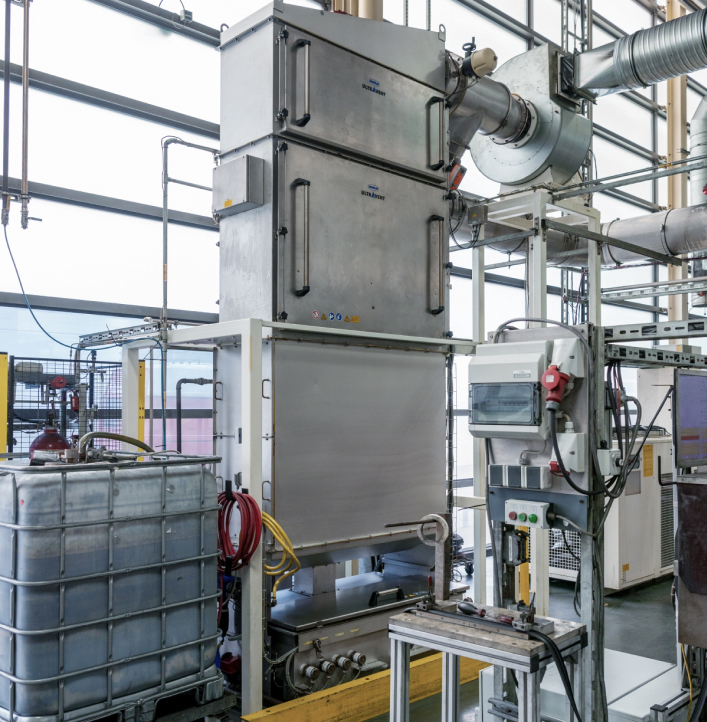
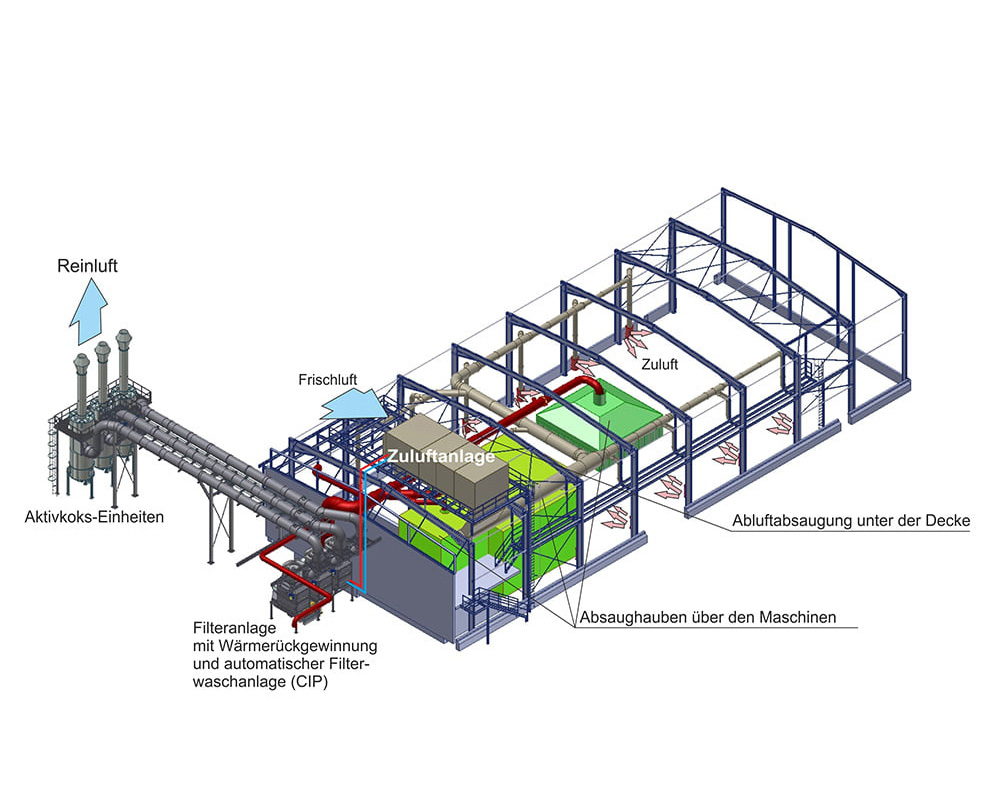
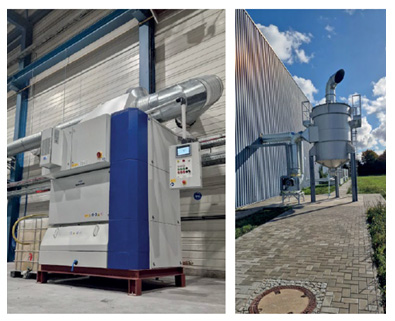
At the Bietigheim-Bissingen site, Valeo uses a KMA solution with ULTRAVENT® M to clean the exhaust air from salt bath vulcanisation. The modular system combines air/water heat exchangers, electrostatic precipitators, UV light and catalytic carbon to effectively treat hot, contaminated exhaust air while recovering energy.

For Valeo, the decisive factor was creating an alternative to energy-intensive thermal oxidation that reduces operating costs and CO₂ emissions, requires little floor space and remains maintenance-friendly in everyday production thanks to automatic cleaning.

Icon-Industry-Accent

-510 tonnes CO2

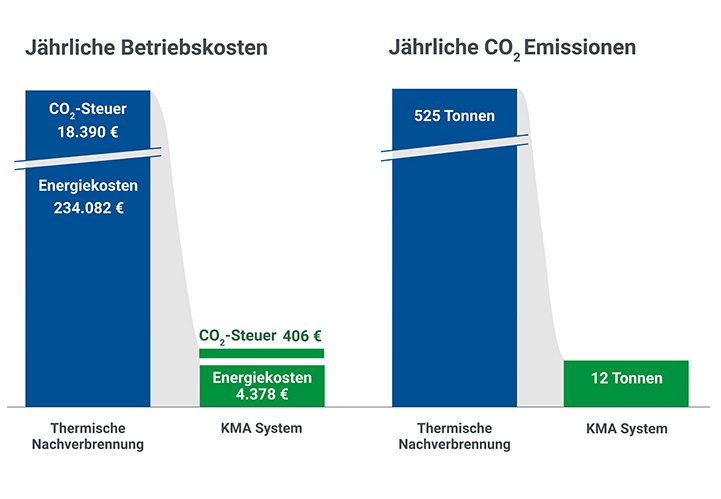
Compared to thermal oxidation, CO₂ emissions drop massively – e.g. from 525 t to 12 t per year

Icon-Energy-Accent

-€240,000 energy costs

Drastically reduce operating costs: approx. €4,800 instead of around €250,000 per year.

Icon-Occupational-health-and-safety-circle-green

automatic cleaning

Integrated cleaning runs automatically at the programmed time – without removing the filters.
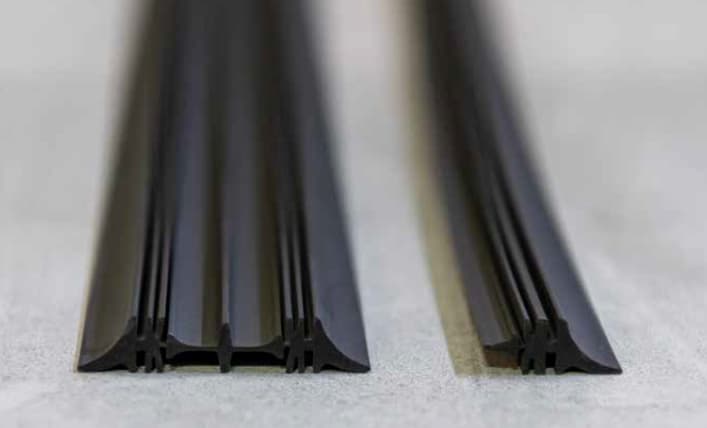
In the Stuttgart area, Valeo manufactures demanding windscreen wiper blades for various automobile manufacturers on two extrusion lines. For the new extrusion line, Valeo initially faced the classic option: cleaning the vulcanisation exhaust air via a thermal oxidation system.
Meeting emission limit values with energy-intensive technology comes at a high price and contradicted the goals of the group-wide sustainability strategy:

High energy demand, enormous CO₂ emissions

The starting situation at VALEO in the wiper plant

Windscreen wiper blades manufactured in extrusion systems

Top 3 pain points at Valeo

Emission limit values


A complex exhaust air mixture of decomposition products and plasticiser emissions must be cleaned so that emission requirements are reliably met

High energy input

Thermal oxidation requires operating temperatures of ≥750 °C – making exhaust air filtration extremely energy-intensive
High CO2 emissions


High energy consumption directly impacts the CO₂ footprint of exhaust air filtration
The potential for sustainable rubber processing

From standard process to pioneering technology

New technology for ambitious goals
Valeo was looking for an alternative technical solution to meet the defined requirements of the specification. The following factors were the focus:

  • Effective exhaust air treatment incl. separation of VOC
  • Heat recovery for increased energy efficiency
  • CO2-efficient process without secondary emissions
  • High process reliability and maintenance convenience

We were not familiar with this technology until then. The process was very satisfactory for us. We did not have to familiarise ourselves with the topic first, but defined our requirements, the concept was designed and implemented according to these.

Michaela Hauptlorenz, Valeo Wiper Systems, Head of Engineering

Enormous Cost and CO₂ Reduction

The successes for Valeo's vulcanisation process

Easy maintenance & performance

The integrated automatic cleaning system ensures the performance of the technical modules and minimises maintenance effort.

From €250,000 to €4,800 operating costs

Minimal energy consumption, intelligent heat recovery and reduced CO2 levies lower annual operating costs.

From 512 t to 12 t CO2 emissions annually

The modern environmental technology is extremely economical in operation and does not burn fossil fuels.

Cost comparison of an oxidiser to a KMA exhaust air filter system

Valeo Wiper Systems is cleaning the exhaust air generated during the vulcanisation of its wiper blade profiles at the Bietigheim-Bissingen site for the first time with an electrostatic precipitator system from KMA instead of energy-intensive thermal oxidation. As a result, CO₂ emissions and operating costs are falling drastically, while a modular structure (including heat exchanger, electrostatic precipitator, UV module and activated carbon filter) reliably cleans the exhaust air and can additionally recover waste heat. How the technology works in detail, what savings are possible and why Valeo is now considering converting further lines – you’ll find out in the full article.

How we successfully supported Valeo

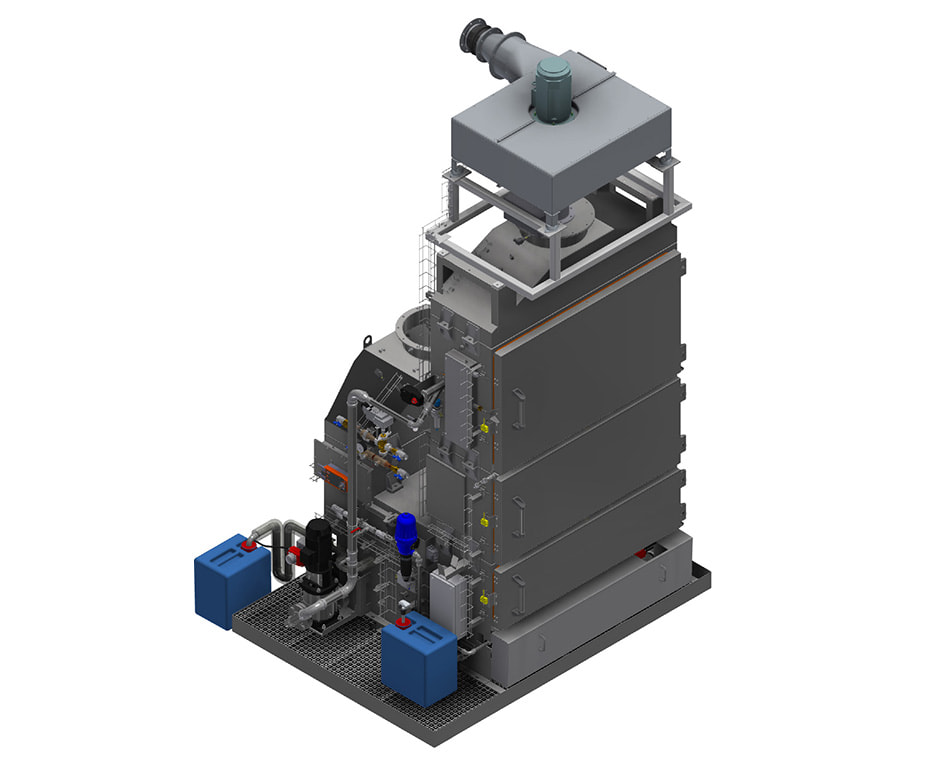
The modular system – the ULTRAVENT® M filter system

Our solution for Valeo

Our solution modules for VALEO

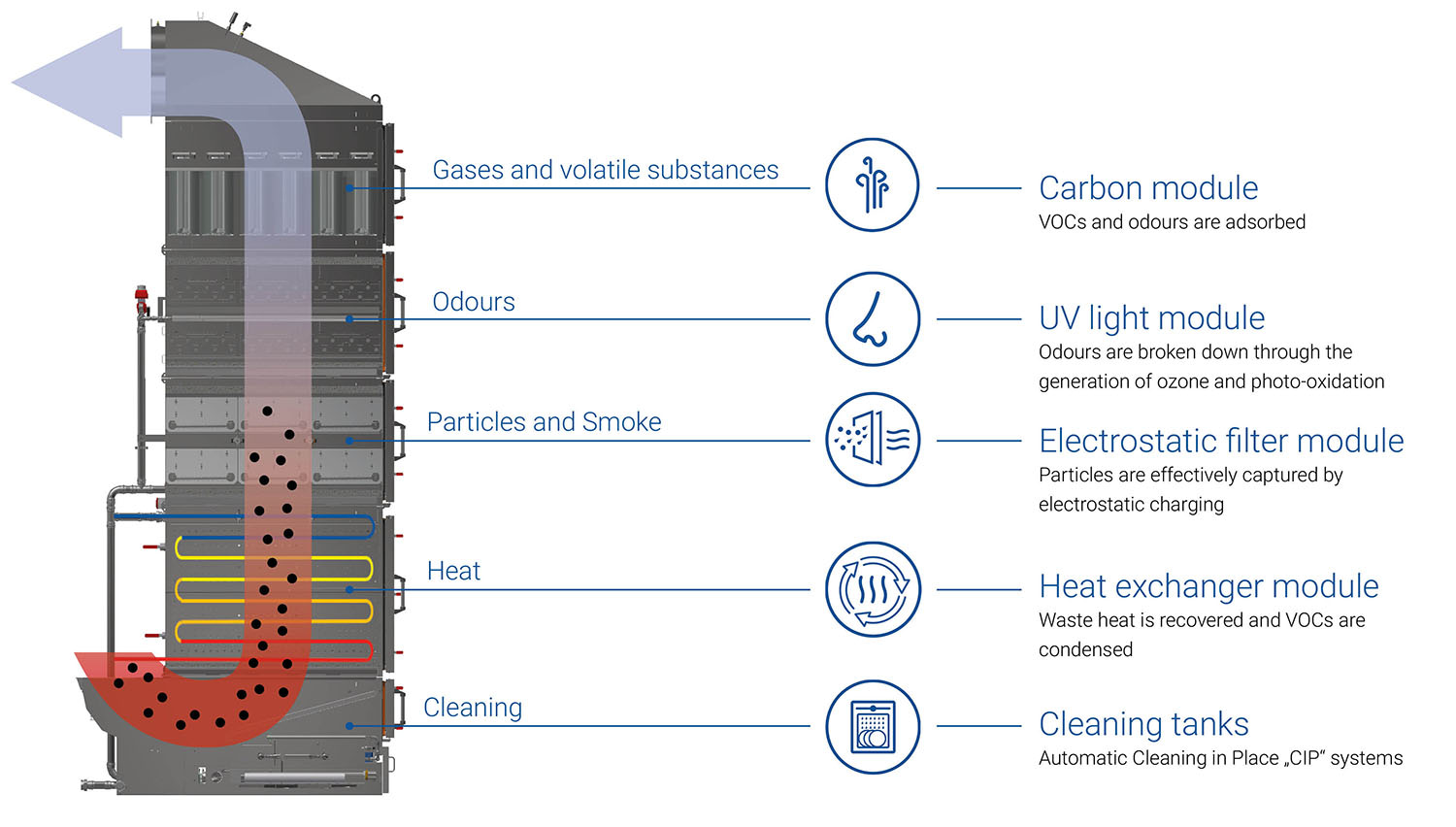
KMA modules were combined as needed for exhaust air filtration and heat recovery at the extrusion system.

Automatic cleaning system simplifies maintenance

Heat exchanger, electrostatic precipitator and UV light module are automatically cleaned inside the filter housing for long-term performance.

UV light & carbon filter for odour separation

Effective separation of odour emissions and absorption of volatile organic compounds (VOC).

Double electrostatic precipitator for clean air

For effective separation of particles & aerosols.

Double heat exchanger recovers energy from exhaust air

The two-stage air-water heat exchanger heats process water to 60 degrees and preheats the supply air for the painting system.

UV-M-individual-modules-V6-web
The functional modules of the universal filter system: combinable as needed for exhaust air filtration and heat recovery in various industries and processes

“With our modular system, we can meet the most diverse requirements and thus deliver the right solution for the process at Valeo.”

Milan Wlömer, Research and Development, KMA

clean air.
save energy.

>3,000

Systems installed worldwide

80 %

Energy savings possible compared to conventional exhaust air technology

360°

Emissions, exhaust air and energy. Engineered together.

1,500 +

Customers worldwide trust our technology

DO YOU HAVE QUESTIONS?

Frequently asked questions about exhaust air filtration in vulcanisation

Yes. What is transferable is not the process, but the task: hot process exhaust air contaminated with particles, aerosols and volatile organic compounds, which must meet emission limit values and at the same time contains usable heat. This arises in extrusion as well as in injection moulding, compounding, masterbatch and film production, at tempering ovens and in recycling processes. At Valeo it is decomposition products and plasticiser emissions from vulcanisation, at Neidhardt Rohstoff it is plasticiser odours from 10,000 m³/h extruder exhaust air – same modules, different configuration. What your process needs results from volume flow rate, exhaust air temperature, VOC load and your heat demand.

The effect acts directly on the site’s Scope 1 emissions because no natural gas is burned anymore. At Valeo, the CO₂ emissions from exhaust air filtration fell from around 512 to 12 tonnes per year. This exact point was decisive for Valeo: Meeting emission limit values with energy-intensive technology had a high price and contradicted the goals of the group-wide sustainability strategy. In the automotive supply chain, this is increasingly also a question of providing evidence to manufacturers.

By having each stage take on its own task instead of thermally destroying everything. In the ULTRAVENT® M at Valeo, a two-stage air/water heat exchanger cools the exhaust air, whereby part of the volatile organic compounds condenses out. A double electrostatic precipitator separates particles and aerosols, UV light oxidatively breaks down odorous substances, and a catalytic carbon stage adsorbs the remaining gases and VOC. Thermal oxidation requires operating temperatures of 750 °C and above for this – this energy input is completely eliminated.

Yes. At Valeo, the classic thermal oxidation option was initially on the table for the new extrusion line, and the decision was made before the investment. Replacing an already running system is equally possible and has been implemented in other projects; the exhaust air technology is connected to the existing process without changing the manufacturing process itself. In this case, the change notification or approval must also be clarified – we support you with this.

Little – this was explicitly one of the selection criteria at Valeo. The ULTRAVENT® M combines heat exchanger, electrostatic precipitator, UV module, carbon filter and cleaning system in a compact, modular housing, so that no separate units need to be installed. How much space is needed in individual cases depends on the volume flow rate and the number of stages; installation in the hall, outdoors or on the roof is possible.

The order of magnitude yes, the exact value no. The approximately €4,800 compared to about €250,000 for thermal oxidation refers to the system at Valeo; accordingly, CO₂ emissions fell from around 512 to 12 tonnes per year. How large the difference is in your case is determined by four variables: volume flow rate, operating hours, exhaust air temperature and the energy source used today. Give us these four values – we’ll calculate the comparison for your system.

Victor-Schön-KMA-Sales_600px

Viktor Schön

Sales Manager
+49 2244 9248 42

Your direct contact

Talk to Viktor Schön

Whether it’s extrusion, compounding, film production or vulcanisation: in plastics processing, every exhaust air stream is different.

Do you need to comply with limit values, reduce odours or cut energy costs? If so, let’s work together to find the solution that best suits your process.

Customer examples

KMA Solutions in Use

Sustainable Emissions Control at
Kraiburg Elastik


Strong-smelling process exhaust air from rubber processing – and at the same time the pressure to save energy: Kraiburg solves both with an energy-efficient exhaust air filter system including heat recovery. Read how the company saves over €200,000 in energy costs and 400 t of CO₂ annually compared to an RTO.
No odour emissions during
compounding at Neidhardt Rohstoff


Neidhardt wanted to ensure that 10,000 m³/h of extruder exhaust air leaves the new production hall cleaned and free of plasticizer odors – TA-Luft-compliant. The case study shows step-by-step how the combination of double electrostatic precipitator + activated carbon filter ensures exactly that.
Tempering of seals at
Freudenberg Sealing Technologies


Frequent, elaborate maintenance on outdated electrostatic precipitators became a bottleneck – Freudenberg therefore switched to a modern system. Learn how the automatic CIP cleaning (like an integrated "dishwasher") reliably keeps the technology clean and enables a low-maintenance solution.

Our solutions in the trade press

Publications & technical articles

More information

Downloads & links

Brochures

ULTRAVENT M brochure

Further downloads

Laws & guidelines

EU BREF Directive

TA-Luft: Air pollution control – emission limit

VDI 2262-3: Workplace air quality – pure-air recirculation

TRGS 900: Workplace limit values